

There is a question most serious readers never say out loud.
It is not about a hard passage or a disputed doctrine. It is quieter than that. It comes after years of study, after the cross-references and the word studies and the careful outlines, and it sounds something like this: I know a great deal about God now. But do I know what He is like?
Philip asked it.
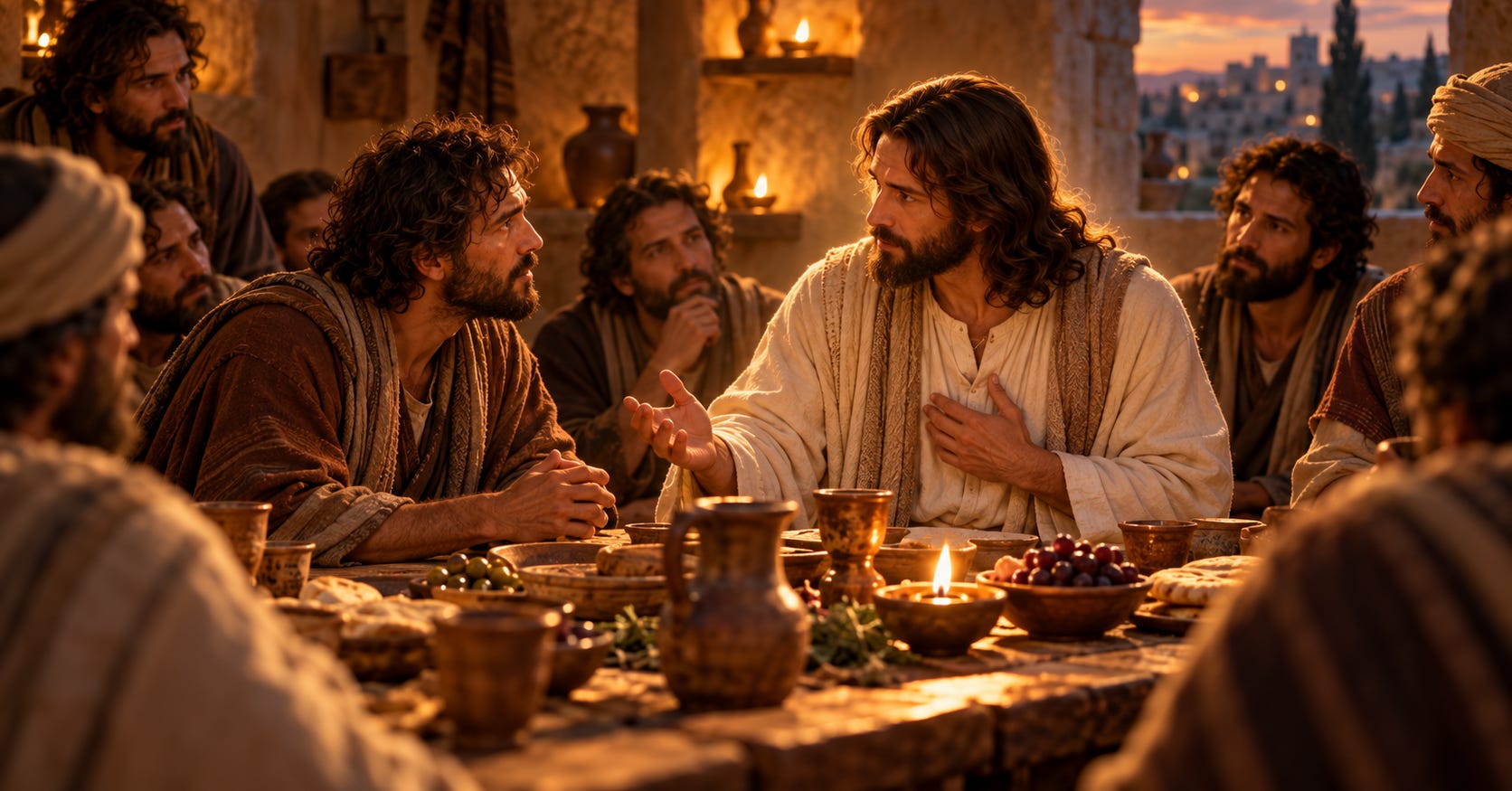
It was the last night. The meal was over. Jesus had been speaking about preparing a place, about the way to the Father, and Philip — who had walked beside Him through those years of ministry, who had seen the water become wine and the five thousand fed — finally said what was in his chest: “Lord, show us the Father, and it is sufficient for us” (John 14:8, NKJV).
Just that. Show us. And it will be enough.
If you have ever closed your Bible feeling that you had collected information about God without ever quite seeing Him, Philip’s sentence belongs to you too.
Listen to the answer. “Have I been with you so long, and yet you have not known Me, Philip? He who has seen Me has seen the Father; so how can you say, ‘Show us the Father’?” (John 14:9, NKJV).
There is gentleness in that reply, and there is something staggering. Jesus does not point Philip to a vision, or a list of divine attributes, or a mountaintop experience. He points to Himself. Look at Me. You have been looking at the Father the entire time.
John had already told us this in the opening of his Gospel, though it is easy to read past: “No one has seen God at any time. The only begotten Son, who is in the bosom of the Father, He has declared Him” (John 1:18, NKJV).
The word behind “declared” is exegeomai. It means to lead out, to explain fully, to bring into the open what was hidden. Whatever we make of the fact that English borrowed its word exegesis from that verb, the verse carries its own weight. No one has seen God. The Son has made Him known. Christ is the Father, explained.
Hebrews says it with a craftsman’s precision. God “has in these last days spoken to us by His Son”, the One “who being the brightness of His glory and the express image of His person” (Hebrews 1:2-3, NKJV) holds all things together. That phrase “express image” translates charakter — the impression a die leaves when it is pressed into metal. Not a portrait painted from someone’s description. The exact stamp.
Paul calls Him “the image of the invisible God” (Colossians 1:15, NKJV). The invisible, made visible.
Now set this beside two other aches. There is the careful reader whose study never seems to get off the ground, who runs every check and still feels grounded. And there is the wounded reader who wonders whether any voice about God can be trusted again. Those two aches have the same answer, and Philip heard it in an upper room.
If you want to know whether God can be trusted, look at Christ. Watch Him tell the truth at His own trial, knowing it would cost Him His life. If you want to know whether all the study is leading anywhere, look at Christ. He is where it was always leading. The method serves the reading. The reading serves the Book. The Book delivers a Person.
And that Person, when you finally see Him, turns out to be the Father in a form you can recognize.
This changes how you handle the hard passages, too. When a text seems to show God as harsh beyond recognition, or soft beyond justice, you are not left to settle it by instinct. You bring it to Christ. God described Himself to Moses as “merciful and gracious, longsuffering, and abounding in goodness and truth . . . by no means clearing the guilty” (Exodus 34:6-7, NKJV). Mercy and justice together. Then that same character walked through Galilee — welcoming the outcast, rebuking the proud, weeping at a tomb, driving the merchants from the temple — and went to a cross where mercy and justice met in one body. If your reading of a passage produces a God you would not recognize in Christ, the reading is not finished.
That is not a soft test. It may be the hardest one there is. It means every conclusion you reach about God has to survive comparison with the life, words, death, and resurrection of Jesus.
Philip did not need a new experience. He needed to look again at what had been in front of him all along.
Maybe that is true of us. Maybe the Father has not been hiding.
Maybe He has been sitting across the table, breaking bread, and the real question is not whether He will show us, but whether we will finally recognize who has been speaking from every page we have been reading . . . and whether He is still speaking now.
“Jesus said to him, ‘Have I been with you so long, and yet you have not known Me, Philip? He who has seen Me has seen the Father; so how can you say, “Show us the Father”?’” — John 14:9 (NKJV)
Reflection Question: Choose one passage that has troubled you about God’s character. Write what it seems to say about Him. Then write one thing Christ said or did in the Gospels that speaks to the same trait, and compare the two side by side.
Ready for Biblical Study That Goes Deeper Than Sunday School?
Join Truth Prospectors receiving systematic biblical teaching through Scripture-interpreting-Scripture methodology. No denominational filters. No shallow devotionals. Just the authority of God’s Word unlocking Christ’s complete ministry through the Sanctuary framework.
The Word Miner Ministries Resources
LISTEN to The Word Miner Podcast
Tired of surface-level Bible teaching? Join us as we tactically mine Scripture’s hidden treasures through sanctuary-based interpretation. Discover how systematic Bible study reveals Christ’s complete ministry and empowers you to unearth profound truths that denominational traditions often miss.

READ Our Daily Devotional: The Daily Shekinah Revival
Daily devotions restoring God’s glory within. A biblical devotional series that guides Truth Prospectors through daily encounters with God’s presence, using sanctuary typology and Scripture-centered teaching to restore authentic spiritual revival in the believer’s heart and life.

LEARN The Core Pillars of Bible Study
Want to dig deeper into these truths? Explore The Core Pillars of Bible Study. Discover how Christ is the Center of all interpretation, why The Sanctuary is the Map for understanding God’s Word, and learn how Scripture is the Authority that interprets itself.
Connect With Us:
Find Us on Social Media:
Legal “Stuff”
© 2026 The Word Miner Ministries