


Picture a man riding toward Damascus with letters of authorization in his bag, on his way to arrest anyone he finds who belongs to what he considers a dangerous new sect. He is not doing this reluctantly. He is not doing it for money or status. By his own later account, he believed with everything in him that he was serving God correctly, protecting the faith of his fathers from a heresy threatening to corrupt it. He would later describe himself as having done it in ignorance and unbelief, not as a cynic, but as someone entirely convinced he was right: “I obtained mercy because I did it ignorantly in unbelief” (1 Timothy 1:13, NKJV).
That detail deserves more weight than it usually gets. Saul of Tarsus was not a fraud. He was not performing devotion he did not feel. He describes his own former zeal in terms that sound almost admirable on the surface, calling himself blameless according to the law he was so carefully keeping, a Pharisee’s Pharisee, more advanced in his own tradition than many of his peers (Philippians 3:5-6, NKJV). And he used every bit of that sincerity, that discipline, that conviction, to persecute the very people God was actually working through.
That should complicate any assumption that sincerity is a reliable guide to whether a person is right. It is tempting to treat conviction as though it were its own kind of evidence, on the theory that nobody could be that devoted, that certain, that willing to sacrifice comfort and reputation for a cause, unless the cause were true. Saul is the counterexample sitting in plain sight. He had all of that. He was still wrong, badly enough wrong that he was, by his own description, “chief” of sinners for what his conviction led him to do (1 Timothy 1:15, NKJV).
Paul later wrote with unusual bluntness about how this kind of thing keeps happening, describing a category of deception that does not look like deception at all while it is occurring. “For such are false apostles, deceitful workers, transforming themselves into apostles of Christ. And no wonder! For Satan himself transforms himself into an angel of light” (2 Corinthians 11:13-14, NKJV). Notice the specific shape of that warning. Not a warning about people who present themselves as obviously false, wearing the costume a person would expect deception to wear. A warning about deception dressed as its opposite, arriving with all the outward marks of light, precisely so it will not be examined the way something suspicious would be examined.
This is what makes deception dangerous in a way that goes beyond simple inconvenience. Nobody sets out expecting to be fooled by something obviously counterfeit. The danger was never in the version of error that looks like error. It is in the version that looks like devotion, that carries every outward marker a person has learned to associate with authenticity, right down to the sincerity of the person carrying it forward. Saul was not lacking in religious feeling. He had more of it than most of the people around him.
Jesus described a version of this same pattern from the other side, describing people who will approach Him with complete confidence in their own standing, listing off the impressive things they did in His name, only to be told He never knew them (Matthew 7:22-23, NKJV). What is striking about that scene is how surprised those people appear to be. They are not portrayed as people who suspected all along that something was off. They are portrayed as people convinced their activity had settled the question, right up until it was settled for them in the opposite direction.
Jeremiah put words to why this keeps catching people off guard: “The heart is deceitful above all things, and desperately wicked; who can know it?” (Jeremiah 17:9, NKJV). Not simply capable of being deceived by outside forces, though that is true too, but capable of deceiving itself from the inside, mistaking its own zeal for confirmation, its own certainty for evidence, in a way that feels, from the inside, exactly like conviction rather than error.
None of this is a reason to distrust every strong conviction a person holds, including your own, as though certainty were automatically suspicious. Saul’s story does not end with him staying wrong. It ends with him encountering something that stopped him in the road and forced a complete reexamination of everything he had been so sure about, and the man who emerged from that reexamination spent the rest of his life more useful to the truth than he had ever been to his own confident version of it. The correction was possible. It was just not something his sincerity could have produced on its own.
So here is the harder question sitting underneath the more comfortable one. Most people ask whether they are sincere in what they believe, and the answer is almost always yes. Fewer people ask the question Saul eventually had to face on the road, which is not whether the conviction is sincere, but whether it is correct, and whether those two things have quietly been treated as the same question for longer than they should have been.
Focus Verse: “For such are false apostles, deceitful workers, transforming themselves into apostles of Christ. And no wonder! For Satan himself transforms himself into an angel of light.” — 2 Corinthians 11:13-14 (NKJV)
Ready for Biblical Study That Goes Deeper Than Sunday School?
Join Truth Prospectors receiving systematic biblical teaching using Scripture-interpreting-Scripture methodology. No denominational filters. No shallow devotionals. Just the authority of God’s Word unlocking Christ’s complete ministry through the Sanctuary framework.
The Word Miner Ministries Resources
LISTEN to The Word Miner Podcast
Tired of surface-level Bible teaching? Join us as we tactically mine Scripture’s hidden treasures through sanctuary-based interpretation. Discover how systematic Bible study reveals Christ’s complete ministry and empowers you to unearth profound truths that denominational traditions often miss.

READ Our Daily Devotional: The Daily Shekinah Revival
Daily devotions restoring God’s glory within. A biblical devotional series that guides Truth Prospectors through daily encounters with God’s presence, using sanctuary typology and Scripture-centered teaching to restore authentic spiritual revival in the believer’s heart and life.

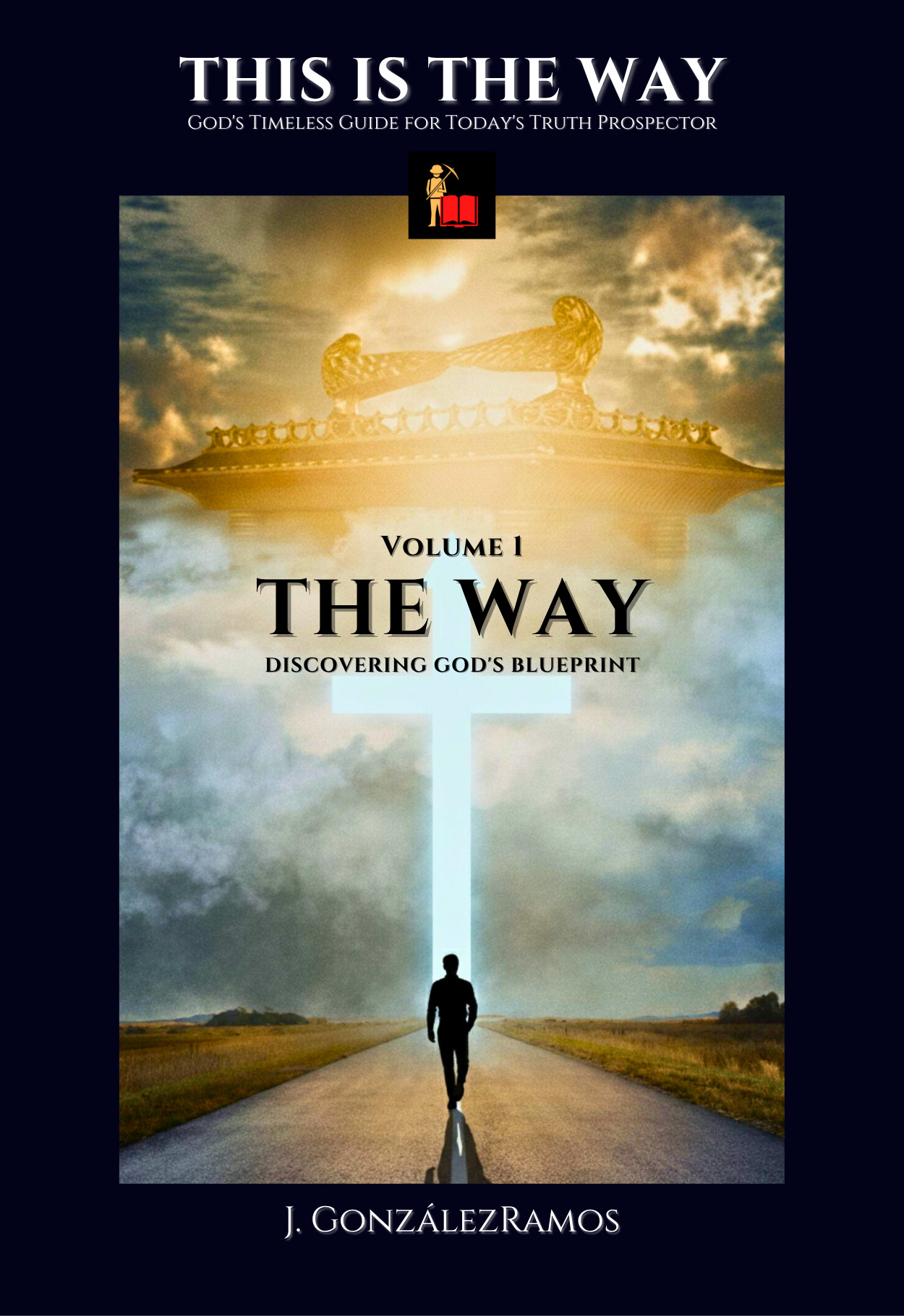
GET The Book: THE WAY: Discovering God’s Blueprint
What if the Bible’s key has been hidden in plain sight? Once you see it, Scripture will no longer seem scattered.
Sincere believers have pieced together disconnected verses, endured shallow teachings, and seen interpretations fail. The answer is the Biblical Sanctuary: God’s divine blueprint in Scripture from Genesis to Revelation. It’s not a human system but a pattern that unlocks prophecy, reveals Christ’s ministry, and turns fragmented knowledge into understanding.
LEARN The Core Pillars of Bible Study
Want to dig deeper into these truths? Explore The Core Pillars of Bible Study. Discover how Christ is the Center of all interpretation, why The Sanctuary is the Map for understanding God’s Word, and learn how Scripture is the Authority that interprets itself.
Connect With Us:
Find Us on Social Media:
Legal “Stuff”
© 2026 The Word Miner Ministries