

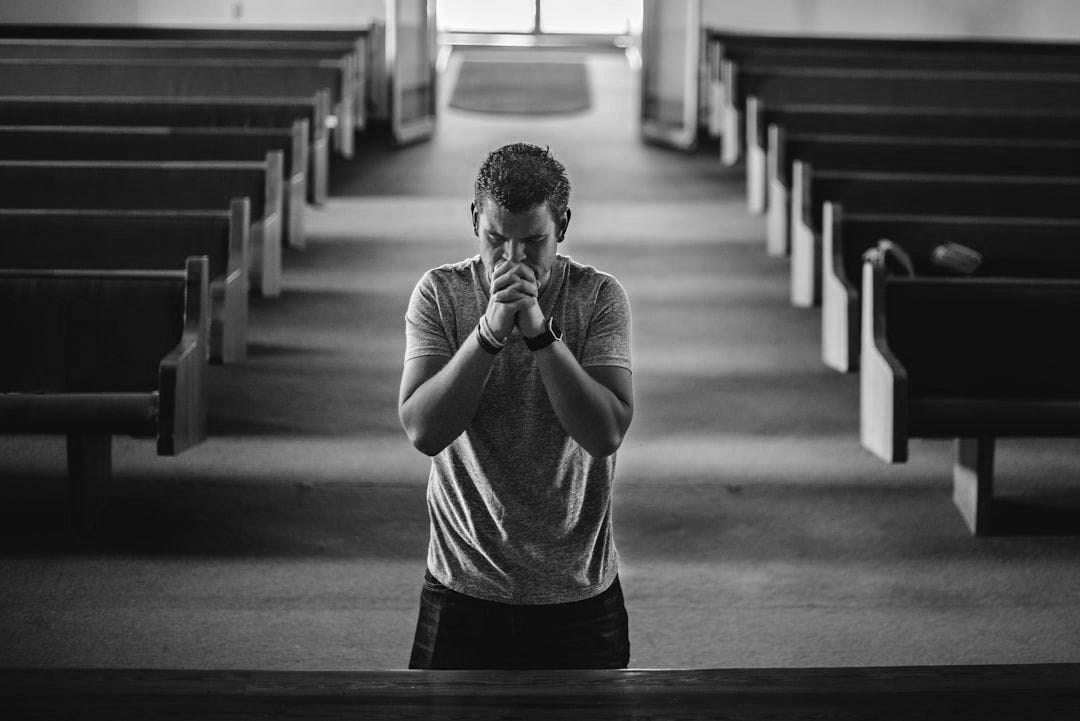
Confused about who does what in sanctification?
Some teachers emphasize human effort so much that grace gets lost. Others emphasize divine grace so much that human responsibility disappears. What's the biblical “balance”?
Here's what Paul understood that brings clarity to this question: "Work out your own salvation with fear and trembling; for it is God who is at work in you, both to will and to work for His good pleasure" (Philippians 2:12-13). Notice both elements—human work and divine work, operating together in perfect partnership.
This isn't a contradiction—it's a collaboration. God doesn't do everything while we do nothing, nor do we do everything while God merely cheers us on. True sanctification requires both divine power and human participation, both God's enabling and our choosing, both supernatural transformation and natural cooperation.
Think about how this works in practice. When you feel the Holy Spirit prompting you toward righteousness or away from sin, what happens next depends on your response. The Spirit provides the awareness, the motivation, and the power—but you must choose to cooperate with that divine work rather than resist it.
This is where the reality of spiritual warfare comes into play. Paul acknowledges that the Christian will feel the promptings of sin, but they will maintain a constant fight against it. Sanctification doesn't eliminate temptation—it provides resources for victory over temptation. It doesn't make the fight unnecessary—it makes the fight winnable.
But here's the encouraging truth: in this battle, you're not alone. Human weakness is joined with divine strength. When your natural ability reaches its limit, God's supernatural power takes over. When your willpower fails, His Spirit provides what you lack. This is where faith exclaims: "Thanks be to God, who gives us the victory through our Lord Jesus Christ" (1 Corinthians 15:57).
Understanding this partnership transforms your entire approach to Christian living. You're neither passively waiting for God to make you holy without your involvement, nor desperately trying to make yourself holy without His power. You're actively cooperating with divine grace to become what God has called you to be.
This cooperation involves several practical elements. First, you must be willing to have your character examined by God's standards. You can't be sanctified by principles you refuse to acknowledge. Second, you must choose to align your life with what God reveals, even when it's costly or difficult. Third, you must depend on divine strength rather than human effort for the power to change.
But here's what makes this process both challenging and encouraging: sanctification is progressive. Scripture makes this clear. When you experience conversion and find peace with God through Christ's sacrifice, the Christian life has just begun. From there, you're called to "go on unto perfection," to grow up to "the measure of the stature of the fullness of Christ."
This means you don't have to achieve perfect holiness overnight. Sanctification is a journey, not a destination. It's a process of gradual transformation as the Holy Spirit works in your heart and you cooperate with His work. Some areas of your life will change quickly; others will require patient, persistent effort over time.
The key is staying engaged in the process without becoming discouraged by the pace. Paul described his own experience: "Not that I have already obtained it or have already become perfect, but I press on so that I may lay hold of that for which also I was laid hold of by Christ Jesus" (Philippians 3:12). Even the great apostle saw sanctification as ongoing work requiring continued effort.
This perspective should both humble and motivate you. Humble you because it acknowledges that you have a real part to play in your spiritual growth. Motivate you because it assures you that divine power is available to accomplish what human effort alone could never achieve.
Your part is to be willing, available, and responsive to God's transforming work. His part is to provide the power, wisdom, and persistence needed to complete the transformation. Together, this divine-human partnership can accomplish what neither could achieve alone.
"For it is God who is at work in you, both to will and to work for His good pleasure." - Philippians 2:13
