

Listen to Audio “Deep Dive” Discussion.
Download The Discussion “Slide Deck.”
That Question That Wouldn’t Let Go
Puerto Rico, 2003.
I got a month’s notice to teach on Sabbath morning about Sola Scriptura. A month felt like plenty of time. After all, I understood the concept—”The Bible Alone.” Simple enough, right?
But as I sat down to prepare, this question kept nagging at me, wouldn’t let go until I chased it down: The Bible Alone... for what? Alone as the source of what? Alone as authority for what purpose? What exactly was I claiming when I said “Scripture alone”?
That itch drove me deep into the history of the Protestant Reformation. I needed to understand where this principle came from, what it actually meant—not just what I assumed it meant. And what I discovered over that month transformed everything.
Sola Scriptura wasn’t just a slogan. It was a comprehensive framework with seven distinct tenets. Scripture as supreme authority, yes—but also Scripture’s sufficiency for salvation, Scripture’s clarity for ordinary believers, Scripture interpreting itself, Scripture-centered teaching, personal responsibility for Scripture study, and continuous reformation based on Scripture. Each tenet built on the others, supported the others, created a complete system.
I taught that Sabbath morning with a clarity I’d never had before. Scripture wasn’t just one authority among many—it was THE authority. Not because I said so, but because God had revealed Himself through it. I thought I’d arrived. I became what you might call a self-taught Bible scholar. I could defend sound doctrine in any discussion, analyze texts thoroughly—languages, context, grammar, meaning. I had the tools, the knowledge, the first pillar standing firm.
But something was still missing.
When Knowledge Wasn’t Enough
Five years passed. 2008 arrived carrying what I can only describe as dark times in my life. The kind of season when everything you thought was stable starts shifting beneath you. And in that darkness, surrounded by all my biblical knowledge and doctrinal precision, I had to face an uncomfortable truth: I didn’t actually know what Scripture’s purpose was.
Oh, I could tell you what the Bible said. I could parse verbs in Greek, trace themes across Testament boundaries, win theological arguments. But why? To what end? What was all this knowledge supposed to produce? I thought the goal was heaven, salvation, eternal life—getting doctrine right so I could make it through the pearly gates.
Then I encountered the Emmaus Road story with fresh eyes. Two disciples walking, discouraged, confused. Jesus Himself joins them, but they don’t recognize Him. And what does He do? “Beginning at Moses and all the Prophets, He expounded to them in all the Scriptures the things concerning Himself.” All the Scriptures. Concerning Himself. Not concerning doctrines or salvation mechanics or heaven’s geography. Concerning a Person.
Later, after they recognized Him, they asked each other: “Did not our heart burn within us while He talked with us on the road, and while He opened the Scriptures to us?” Their hearts burned. Not their minds—though understanding came. Not their doctrinal systems—though truth was revealed. Their hearts. Because they’d encountered the Person.
That’s when it hit me. Scripture’s goal and purpose isn’t heaven or salvation or correct theology—it’s the revelation of Jesus Christ as the center of everything. Heaven matters because He’s there. Salvation matters because it restores relationship with Him. Theology matters because it reveals Him more clearly. Everything pointed to Him. Moses, the Prophets, the Writings, the Gospels, the Epistles—all of it was about revealing the Person.
My Bible study changed that year. Same Scripture, same tools. But now I was looking for HIM in every passage. And I found Him everywhere. The whole Bible became a love letter instead of a legal document. Joy came back—the kind that had been missing even when my doctrine was correct. I thought I’d finally arrived. Two pillars now. Authority and Center. Scripture alone, revealing Christ always.
But the pieces still felt scattered somehow.
When Everything Finally Connected
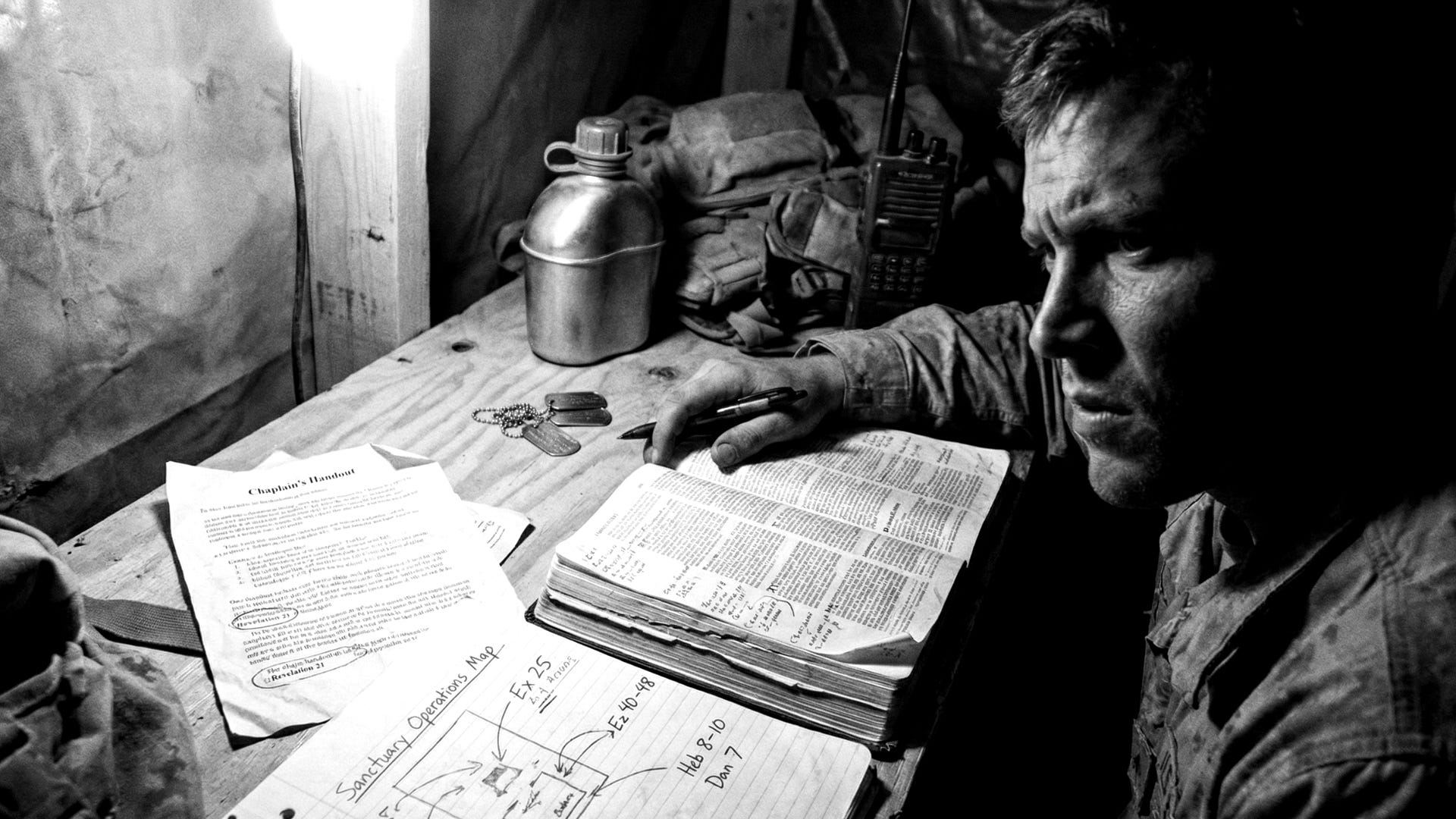
FOB Frontenac, Afghanistan. Spring 2012. Four years after discovering Christ at the center. Nine years after understanding Scripture as authority. And something still felt incomplete.
I was sitting in a chapel service listening to our chaplain preach about heaven from Revelation 21. Streets of gold, gates of pearl—beautiful imagery. I appreciated it. But that same nagging sense returned, the feeling of missing something just beyond my grasp.
That night, alone in my quarters, I opened my Bible to Revelation 21 and started reading. Really reading, letting the text speak. And the Holy Spirit started bringing other passages to mind. Exodus 25—God’s detailed instructions for the tabernacle. Ezekiel 40-48—the intricate temple vision. Hebrews 8-10—discussion of heavenly and earthly sanctuaries. Why these connections? What was I seeing?
I flipped to Hebrews 8:1-2: “We have such a High Priest, who is seated at the right hand of the throne of the Majesty in the heavens, a Minister of the sanctuary and of the true tabernacle which the Lord erected, and not man.”
There’s a sanctuary in heaven. Not symbolic, not metaphorical. Real. Where Jesus ministers right now. If the earthly sanctuary was built according to the pattern shown on the mountain, and if there’s a heavenly original... everything in Leviticus suddenly mattered. Not as boring ritual, but as a map, a training system, a visual prophecy showing Christ’s complete ministry in three dimensions.
Every sacrifice pointing to His death. Every priestly service revealing His current work. Every piece of furniture mapping a phase of redemption. The whole system organizing everything I’d been learning about Scripture authority and Christ at the center. Structure. Organization. Framework. The third pillar.
I sat there watching nine years of discovery suddenly organize itself into one coherent system. Same Bible, same Christ. But now I could see how everything fit together. Scripture as my authority—telling me WHERE to look for truth. Christ as my center—showing me WHAT I was seeking in every passage. Sanctuary as my map—revealing HOW everything organized into God’s complete plan. All three working together, supporting each other.
That’s when I finally understood why I’d felt incomplete before.
The Three-Legged Stool
You know what happens when you try to sit on a two-legged stool? Doesn’t matter how carefully you balance or how much you compensate—the structure itself is unstable. That’s what I’d been experiencing. Not failure, not lack of commitment. Structural instability from missing pieces.
Think about it. With just Scripture authority, I had knowledge, accuracy, doctrinal precision. But no encounter with the Person. Bible facts without Bible relationship. Adding Christ at the center changed everything—suddenly Scripture became personal, relational, transforming. But without the organizing framework, I was encountering Christ in random passages without understanding how His complete ministry fit together.
Only when the sanctuary map emerged did I see the whole picture. Not just that Jesus died—that’s the Courtyard. Not just that He lives—general truth. But WHERE He is (Holy Place transitioning to Most Holy Place), WHAT He’s doing there (daily intercession moving to final judgment), and HOW that affects me today (living in the antitypical Day of Atonement).
All three pillars creating one stable structure. Remove any one and you’re back to wobbling. But when all three stand firm, supporting each other, balancing each other—everything becomes stable.
Maybe you’ve been experiencing that same structural instability, that sense of missing something without knowing what. You’re not failing. You might just need all three pillars functioning together. Let me show you what becomes possible when they do.
Four Transformations That Emerge
When all three pillars work together as an integrated system, four specific transformations happen in your understanding. Not random improvements—specific, predictable outcomes. I’ve experienced each one, watched them develop as the pillars came together. And notice how these transformations connect: understanding God’s character leads to understanding Christ’s ministry, which creates unified doctrine, which produces transformed living. They build on each other, support each other. Like the three pillars themselves, these four outcomes form an integrated system.
TRANSFORMATION ONE: God’s Character Comes Into Focus
When All Three Work Together
Think about trying to understand someone’s personality from a list of their traits. Just words on paper—generous, stern, creative, disciplined. Do you really know that person, or do you just have information about them? The same thing might be happening in your understanding of God.
Scripture authority alone provides access to what God has revealed about Himself—descriptions of His actions, declarations of His nature. But are you encountering HIM, or just collecting data? Add Christ at the center and suddenly those attributes have a face, a voice, a life lived out in real time and space. “He who has seen Me has seen the Father.” The attributes become personal, relational. But are they organized? Do you see how they fit together? That’s where the sanctuary framework comes in—not another list of attributes, but a systematic structure showing how each quality relates to the others, how they work together, how they reveal one unified character.
The Character Revelation in Creation
Most of us read Genesis 1 as the origin story—interesting history, scientific debate, ancient cosmology. But there’s a character revelation you might be missing. Read it again and notice the patterns. God didn’t create everything instantly, didn’t make it all appear in one cosmic explosion. He worked methodically, building complexity on established foundations. Light before luminaries that produce light. Dry land before vegetation needing soil. Atmosphere before birds requiring air. Each day preparing for what follows.
This reveals a God who plans ahead, who anticipates needs before they arise instead of reacting to problems as they develop. Look at those butterfly wings with intricate patterns serving no survival function, the artistic designs God commanded for the sanctuary, sunsets painting the sky in colors no one needed for food or shelter. Why beauty when function alone would have worked? Could it mean your emotional needs matter as much as physical ones, that joy matters because you matter?
Here’s another observation. God could have maintained Eden without human help—omnipotence doesn’t need gardening assistance. So why assign Adam and Eve work? What if sharing authority mattered more than accomplishing tasks, partnership building relationship rather than servants completing assignments? And the Sabbath, established before sin entered, before rest became necessary from labor’s curse—was God tired? Does infinite energy need recovery time? Some call it a “palace in time,” a designated space for communion with creatures He loves. Every week: “Stop producing. Just be with Me.” Productivity or relationship—which matters more?
Now watch Christ during His earthly ministry. Careful planning—choosing twelve, timing public ministry, fulfilling prophecies. Creating beauty—water to wine because joy mattered at a wedding. Inviting partnership—sending disciples to minister instead of doing everything Himself. Prioritizing relationship—withdrawing to pray, engaging people others dismissed. The same character revealed in creation and incarnation.
The sanctuary organizes these observations systematically. The Lampstand’s intricate beaten gold shows beauty matters in worship spaces. Showbread renewed every Sabbath demonstrates regular, predictable provision. Continual fire on the Altar reveals supply that never stops. Precise measurements everywhere prove details matter, instructions come clear. Scripture revealing patterns, Christ embodying qualities, Sanctuary organizing them systematically. Can you see the unified picture forming?
When God Confronts Rebellion
Character reveals itself most clearly in crisis. Watch what happens when sin shattered Eden. Adam and Eve sinned, hid, covered themselves inadequately, terrified to face their Creator whose command they’d violated. What would justice require? Immediate punishment, destroying angels, waiting for groveling repentance? But God came walking in the garden, seeking them, calling: “Where are you?”
That wasn’t an information question—omniscience knew their location. It was an invitation to confession, an expression of a heart bent toward restoration. And before demanding anything, before outlining consequences, He provided the first sacrifice. The first death in a perfect world, an animal killed to clothe their shame with something better than fig leaves. Notice the sequence: first provision, then promise. “The seed of the woman shall bruise the serpent’s head.” From the very beginning, salvation is God’s initiative. He provides before demanding, promises a deliverer before requiring payment.
Now trace this forward through the sanctuary. That first sacrifice in Eden points to the Altar where the Lamb dies for the guilty. The promised deliverer is fulfilled in Christ entering the heavenly sanctuary to minister for us. The entire sacrificial system reveals a systematic plan for dealing with sin without compromising either justice or mercy. The consistent picture emerging about God’s character shows supreme initiative in grace, meeting humanity at the point of deepest failure with provision and promise.
Where Justice and Mercy Meet
Many struggle with seemingly contradictory attributes—loving but allowing judgment, merciful but demanding perfection, forgiving but maintaining a condemning law. These feel contradictory when studied separately, but watch what the sanctuary reveals.
The Most Holy Place contains the Ark, and inside the Ark sit the Ten Commandments—God’s character written in stone, the standard of absolute righteousness. This standard cannot change, cannot be negotiated lower, cannot be adjusted for human weakness. The law requires death for sin, not as arbitrary punishment but as natural consequence of separating from the Life Source. This law is as unchangeable as God’s own character.
But notice what sits on top of the Ark—the Mercy Seat, where blood gets sprinkled on the Day of Atonement. The law’s demands and the sprinkled blood meet at the same location, at God’s throne. Paul saw this perfectly: “That He might be just and the justifier of the one who has faith in Jesus.” Not just OR justifier. Both. Simultaneously. Fully.
God doesn’t choose between these attributes—He satisfies both at the cross, the reality the Mercy Seat foreshadowed. The law convicts, the blood covers. Justice met, mercy flowing. Both at the throne. When you see this through the sanctuary, the contradiction disappears. Attributes don’t compete—they cooperate in perfect harmony.
And Christ fits right at the center. Who provided the blood satisfying justice while extending mercy? God Himself in Jesus Christ. The Father didn’t send someone else to fix His problem—He came Himself. Took flesh, lived under His own law, fulfilled every demand, died under the curse, rose victorious. The cross proves justice is real—sin gets dealt with. The cross proves mercy is infinite—He dealt with it Himself at infinite cost.
All three pillars working together. Scripture revealing the plan, Christ embodying the solution, Sanctuary organizing how justice and mercy unite.
TRANSFORMATION TWO: Christ’s Complete Ministry Becomes Visible
What Most Christians Miss
Quick question: What is Jesus doing right now? Most Christians answer “sitting at the right hand of the Father.” True, but incomplete. What’s He actually DOING there, what’s happening in heaven right now that affects you today? Without all three pillars working together, you’ll likely miss it.
Scripture authority provides passages about Christ’s death, resurrection, ascension—clear, documented, foundational. Add Christ at the center and these aren’t just historical events but encounters with a living Person who loves you. But without the sanctuary framework, you’re missing the organized understanding of His COMPLETE ministry—past, present, future. What He did, what He’s doing now, what He’ll finish before returning.
The Three-Dimensional Training System
God didn’t just announce a coming Savior through abstract prophecies. He provided a training system—three-dimensional, visual, participatory. For fifteen hundred years, from Moses to Malachi, faithful Israelites brought lambs to the altar, watched priests apply blood, received forgiveness. They learned viscerally: sin requires death, blood must be shed, a substitute can die in your place, God provides the means. When John the Baptist pointed at Jesus saying “Behold the Lamb of God who takes away the sin of the world,” faithful Jews understood immediately. They’d been watching lambs die for centuries. Now here was THE Lamb. The sanctuary trained them to recognize their Messiah.
But notice something deeper—God built prophetic patterns into history itself. Living object lessons prefiguring Christ. Adam, the first man whose one act brought death to all, points to Christ the second Adam whose one act brings life. Melchizedek, king and priest without recorded genealogy, foreshadows Christ the eternal High Priest. Joseph rejected by brothers, sold for silver, exalted to save those who betrayed him—that’s Christ’s story. Moses the deliverer from slavery, lawgiver, mediator, shadows the coming Messiah. David the shepherd king defeating giants, suffering unjustly, ruling righteously—all pointing forward.
These weren’t coincidences. God designed these figures to prefigure aspects of Christ’s character and work. When you read the Old Testament with Christ at the center, using the sanctuary as your map, ancient history becomes systematic preparation for recognizing the Redeemer. Scripture providing the accounts, Christ as the focus revealing patterns, Sanctuary organizing the progression from type to antitype.
What Made Christ Qualified
The sanctuary’s strict rules taught crucial truths. Sacrificial animals had to be “without defect”—absolutely perfect—teaching that rescue requires perfection. A flawed sacrifice can’t pay for sin. Priests had to be consecrated, specifically chosen, teaching that the mediator between God and people must be divinely appointed, not self-selected. These weren’t arbitrary requirements but preparation for recognizing what the Messiah would need to be.
Christ’s incarnation solved what you might call the accessibility problem. Humans need a Savior who understands their experience—who knows exhaustion, pain, fear, temptation from the inside, not just theoretical knowledge. Without that, how could He represent you sympathetically? But humans also need a sacrifice of infinite value. No created being, no matter how perfect, could pay the penalty for infinite rebellion against an infinite God.
So Christ became fully human and fully divine simultaneously. Because He’s fully human, He understands you experientially—He knows hunger, exhaustion, rejection, mockery, betrayal. He can represent you because He’s lived your experience. “Tempted in all points as we are”—experiential, not theoretical. Because He’s fully divine, His death accomplishes infinite worth, satisfying unchangeable divine justice completely. The perfect Mediator, human enough to represent you, divine enough to save you. Both fully.
The sanctuary revealed this through the High Priest role. The earthly priest stood between God and people but was flawed, temporary, insufficient. He pointed forward to the perfect, eternal, all-sufficient High Priest—Jesus Christ. Scripture declaring it, Christ fulfilling it, Sanctuary mapping it.
The Two-Phase Ministry You’re Living In
This is where the sanctuary framework becomes essential. Without it, you miss the most important revelation about Christ’s current work. The earthly tabernacle was a copy of the true sanctuary in heaven where Jesus actively ministers—not was ministering in the past but is ministering, present tense, ongoing. This ministry has two distinct phases mapped by the earthly sanctuary services.
In the earthly sanctuary, the Daily service happened every day in the Holy Place—the first apartment. When Israelites sinned, they brought a sacrifice, confessed, the animal was killed, the priest applied blood in the Holy Place. Result? The sinner received forgiveness, sin pardoned. But notice something critical: the sin didn’t disappear. It was transferred from the sinner to the sanctuary through the blood, stored there, waiting for final disposal.
The heavenly reality follows the same pattern. When Jesus ascended in A.D. 31, He entered the heavenly Holy Place. Scripture confirms this: “Christ has not entered the holy places made with hands...but into heaven itself, now to appear in the presence of God for us.” He’s there, in God’s presence, for us. “He always lives to make intercession for them”—present tense, lives, makes intercession, ongoing action.
His focus in this phase is forgiveness, reconciliation, daily intercession. When you confess sin, Jesus presents His blood to the Father on your behalf. You receive pardon, coverage by His righteousness, maintained relationship with God. But the record of that forgiven sin remains in the heavenly books, transferred through Christ’s intercession, awaiting final judgment. This is the phase the church has been in from Christ’s ascension until the transition to Phase Two.
In the earthly sanctuary, once yearly on the Day of Atonement, the High Priest entered the Most Holy Place. This wasn’t about forgiving new sins but dealing with the accumulated record of already-forgiven sins. The High Priest sprinkled blood on the Mercy Seat to cleanse the sanctuary itself, then sent the scapegoat into the wilderness with confessed sins, removing them from the camp forever.
This was a day of judgment—serious, final, decisive. Israelites who didn’t “afflict their soul,” didn’t genuinely repent, were cut off. The question being decided: Who truly belongs to God’s people? Whose repentance is genuine?
Scripture says the heavenly sanctuary also requires cleansing: “Therefore it was necessary that the copies of the things in the heavens should be purified with these, but the heavenly things themselves with better sacrifices than these.” Daniel saw this phase in vision: “I watched till thrones were put in place, and the Ancient of Days was seated...The court was seated, and the books were opened.”
The books—the Book of Life containing names of those claiming relationship with God, and the Book of Remembrance recording deeds of those who fear the Lord. This examination vindicates God’s character before the watching universe, demonstrating He’s just when justifying sinners through faith. It separates genuine believers from false professors, determining whose names remain in the Book of Life. It confirms salvation of the righteous, establishing who inherits eternal life when Christ returns.
Peter tells us where this judgment begins: “For the time has come for judgment to begin at the house of God.” Not with the wicked world but with believers, the church. First, God examines the records of those who’ve claimed His name. And this isn’t a hostile prosecution—you have an Advocate: “If anyone sins, we have an Advocate with the Father, Jesus Christ the righteous.” You’re not facing a courtroom alone. Jesus is your Defense Attorney, pleading His blood, covering you with His righteousness.
What This Means Today
Most Christians think Jesus finished everything at the cross. “It is finished”—His substitutionary death was complete, penalty fully paid, sacrifice perfect. That work finished. But His priestly ministry continues. Right now, at this moment, Jesus Christ is performing the final phase of His ministry in the heavenly sanctuary before He returns. Examining books, separating genuine believers from false professors, vindicating God’s character, preparing His people to stand in judgment. And He’s doing it as your Advocate, your High Priest, your Intercessor, your Defense Attorney.
When you understand this through all three pillars working together, everything changes. He’s not just the historical figure who died for you two thousand years ago—He’s your living High Priest actively ministering for you right now. When you sin and confess, He’s presenting His blood for you. When you pray, He’s making your prayers acceptable mingled with His righteousness. When your case comes up in judgment, He represents you. That’s not past tense. That’s present continuous.
Scripture revealing it through passages from Daniel to Hebrews to Revelation. Christ at the center as the focus and fulfillment. Sanctuary providing the framework that organizes it all. Remove any pillar and you miss this. Keep all three functioning and Christ’s complete, ongoing, active ministry on your behalf becomes clear.
TRANSFORMATION THREE: Doctrines Start Harmonizing
When Beliefs Stop Competing
Ever notice how many Christians hold contradictory beliefs without realizing it? “We’re saved by grace through faith, not by works”—then worry they’re not doing enough to earn approval. “God is love”—then describe Him as an angry judge looking for reasons to condemn. “The Old Testament law has been abolished”—then quote the Ten Commandments to prove certain behaviors are sinful.
This theological whiplash comes from studying doctrines in isolation, collecting verses that support positions, building arguments to win debates, never stepping back to see how everything fits together. When all three pillars work together, Scripture authority ensures every doctrine builds on what the Bible actually says, Christ-centered approach ensures every doctrine points to Jesus and reveals His work, and Sanctuary framework provides the organizing structure showing how doctrines relate to each other and to Christ’s complete ministry. Your theology transitions from scattered collection of isolated beliefs into a cohesive, internally consistent system.
The Harmony Principle
Start with a foundational truth: the Bible has one ultimate Author. Sixty-six books, forty human authors, fifteen hundred years of writing, different languages and cultures and contexts. But behind it all, the Holy Spirit. Which means Scripture possesses perfect internal harmony. The Bible interprets itself, truth never contradicts truth. This is the harmony principle, and it changes how you study.
You cannot build sound doctrine on a single isolated verse. You must systematically gather everything the Bible says about a topic. When you do, you’ll find every truth builds on another, working together as one complete revelation. The wrong approach finds one verse supporting your position, declares victory, ignores verses seeming to contradict it. The right approach finds every verse on the topic—all of them—sees how they fit together, builds doctrine from the complete biblical testimony.
The harmony principle also gives you the clarity filter. Start with passages stating their meaning directly and clearly, use these to interpret passages using symbolic or complex language. Understanding death and the afterlife illustrates this perfectly. Clear passages say “The dead know nothing,” “His thoughts perish” at death, Jesus calls death “sleep,” “The dead in Christ will rise.” Symbolic passages include the rich man and Lazarus (a parable using known imagery) and “Absent from body, present with Lord” (Paul’s hope of resurrection). The clear interpret the symbolic, not the reverse.
When you encounter apparent contradictions, view them as invitations to study deeper until you see how passages work together. Faith and works seem contradictory—Paul says “By grace you have been saved through faith...not of works” while James says “Faith without works is dead.” Study deeper and you find they’re addressing different problems. Paul addresses people trying to earn salvation through works, emphasizing grace. James addresses people claiming faith while living unchanged, emphasizing evidence. Both are true: salvation is by grace through faith, genuine faith produces works as evidence. Not contradiction—complementary perspectives on same truth. The harmony principle says keep studying until you see how they fit.
Anchoring Every Doctrine to Christ
Here’s a test for any doctrine: Does it reveal Christ? If you can master a theological position, defend it brilliantly, win every argument about it, but fail to encounter Jesus through it—you’ve missed the point. Doctrines aren’t abstract theological concepts competing for space. They’re windows into Christ’s character and work.
The Sabbath illustrates this perfectly. The wrong approach says “We keep Sabbath because it’s the fourth commandment. It’s in the law. Obey or disobey.” That’s legalism, rule-keeping disconnected from relationship. Now watch what happens when all three pillars work together.
Scripture authority: Gather everything the Bible says about Sabbath. Genesis 2:2-3 shows God rested on the seventh day and blessed it. Exodus 20:8-11 commands remembering the Sabbath as memorial of creation. Isaiah 58:13-14 calls Sabbath a delight, not a burden. Mark 2:27-28 says Sabbath was made for man and Jesus is Lord of Sabbath. Hebrews 4:9-11 says a Sabbath rest remains for God’s people.
Christ at the center: Jesus is the Creator who rested, Lord of the Sabbath, the One who offers rest. Entering His rest means ceasing your works, trusting His. Sanctuary framework: The showbread was renewed every Sabbath—Sabbath is about feeding on Christ, the Bread of Life. It’s the weekly memorial connecting creation, redemption, and restoration.
The unified understanding emerges: Sabbath isn’t an arbitrary rule God imposed to test obedience. It’s a weekly reminder that Christ is Creator, Lord, and Redeemer. Ceasing your works to rest in His finished work. Feeding on Him as the Bread of Life. Trust, not performance. Relationship, not religion. The doctrine makes sense because it’s anchored to Christ instead of floating as an isolated command.
Try this with any doctrine. Gather all Scripture. Find Christ at the center. Map it to the sanctuary. Watch how it transforms from abstract theology into living encounter with your Savior.
The Sanctuary Organizes Prophecy
The sanctuary isn’t just useful for organizing doctrine—it’s the God-given architectural blueprint proving Old and New Testaments aren’t disconnected but part of one unified revelation. Watch how this works with prophecy.
Many Christians approach Bible prophecy with Middle Eastern geography as the organizing principle, waiting for a literal temple rebuilt in Jerusalem, looking for geopolitical events in Israel, interpreting everything through literal real estate. The sanctuary framework shows this misses the center. Old Testament prophecies about Jerusalem, the temple, and Israel find their ultimate fulfillment universally in Christ and His people—not geographical locations.
Jesus said “Destroy this temple, and in three days I will raise it up”—He spoke of His body, not a building. The New Jerusalem comes down from heaven, not built by human hands. Abraham’s seed is fulfilled in Christ, not political descendants. Believers are the temple, not a reconstructed building. The sanctuary teaches that prophecy centers on Christ and His work, not geography, not politics.
Daniel 8:14 demonstrates this perfectly. “Unto two thousand three hundred days; then shall the sanctuary be cleansed.” Without the sanctuary map, this is a complete puzzle. What sanctuary? Why cleansed? When? With the sanctuary map, clarity emerges. Not the earthly sanctuary—destroyed in A.D. 70. The heavenly sanctuary. “Cleansing” equals Day of Atonement antitype, pointing to transition from Phase 1 (Holy Place ministry) to Phase 2 (Most Holy Place ministry), final judgment before Christ returns. The map turns mystery into clarity and keeps prophecy centered where it belongs—on Christ’s ministry, not geopolitical speculation.
Building Unified Doctrine
Want to systematically build unified doctrine using all three pillars? Pick any doctrine and follow this process.
First, use Scripture authority. Use your concordance, find every passage addressing it, list them all. Don’t cherry-pick verses supporting preconceptions. Get the complete biblical testimony. Second, apply the clarity filter. Identify clear, direct statements, use these to interpret symbolic or complex passages. Let Scripture interpret Scripture.
Third, find Christ at the center. Ask how this doctrine reveals Jesus, how it points to His work. If you can’t answer, keep studying. Every doctrine exists to reveal Him. Fourth, use the sanctuary framework. Determine where this fits in the redemption journey—Courtyard (justification), Holy Place (sanctification), Most Holy Place (judgment/vindication)?
Fifth, test for harmony. Does your interpretation contradict clear Scripture elsewhere? If yes, you’ve missed something. Keep studying. Truth harmonizes. Sixth, show connections. Show how this supports and relates to other doctrines. Build the integrated framework.
When you follow this process, your doctrine stops being a position you defend in arguments. It becomes a window through which you see Christ more clearly. It harmonizes with other truths instead of competing with them. It makes sense as part of God’s complete revelation instead of standing isolated. The three pillars working together—Scripture as your authority, Christ as your focus, Sanctuary as your framework. That’s how you build theology that’s unified, consistent, and centered where it belongs—on Jesus.
TRANSFORMATION FOUR: Life Becomes Systematically Transformed
When Knowledge Actually Changes You
You can know a lot about Christianity without being transformed by it. Maybe you’ve met people who can quote large sections of Scripture from memory, explain complex theological concepts, win debates about doctrine—but their lives show no evidence of the Holy Spirit’s transforming power. They know information about God without knowing God Himself. They study the Bible without being changed by it. They defend theological positions without letting those truths reshape their character. That’s the danger of information without transformation.
The three pillars working together provide not just theological framework but practical life template. Scripture authority keeps your walk grounded in God’s actual commands—not cultural Christianity, not self-help spirituality. Christ-centered focus makes sanctification about relationship with a Person, not religious performance. Sanctuary framework provides step-by-step roadmap from conversion to daily holy living. The sanctuary isn’t just a diagram for understanding doctrine—it’s a three-dimensional instruction manual for spiritual growth.
Where Transformation Begins
Before transformation can happen, you must enter through the gate. The courtyard had one gate, only one, facing east toward the sunrise. Jesus said “I am the door. If anyone enters by Me, he will be saved.” One way to God, not many paths. One door, one Mediator, one Savior. But that gate stands wide open, available to all. Whosoever will may enter.
Entering requires counting the cost and surrendering lordship. You cannot accept Jesus merely as Savior who forgives you while rejecting Him as Lord who rules your life—the two are inseparable. “If anyone desires to come after Me, let him deny himself, and take up his cross daily, and follow Me.” Notice “daily”—not a one-time decision but daily surrender. Taking up your cross doesn’t mean enduring difficult circumstances with patience. It means daily death to your old self, to your autonomy, to your demand for self-sovereignty. Every morning: “Not my will, but Yours.” This is the gate. You cannot bypass it. Christianity without lordship isn’t Christianity—it’s comfortable religion that leaves you unchanged.
The Two Problems Sin Creates
Once through the gate, you encounter two pieces of furniture addressing two distinct problems sin creates—the Altar of Burnt Offering and the Laver. Both are necessary. You cannot skip either.
The Altar addresses your legal guilt. Sin makes you guilty before God’s law. You owe a debt you cannot pay. The penalty is death, the standard is perfection. You fall short completely, condemned. The Altar is where Christ’s substitutionary death pays that legal penalty. This is justification—a completed legal declaration based on Christ’s perfect sacrifice, not your performance.
When Satan accuses you (and he will), when guilt overwhelms you (and it might), when you feel unworthy (and you often will)—return to the Altar. The blood has been shed, the penalty has been paid, the Judge has declared “Not guilty.” Your justification doesn’t fluctuate based on feelings or performance. It’s settled, finished, complete. “There is therefore now no condemnation to those who are in Christ Jesus.” Say it. Believe it. Rest in it.
But sin creates another problem beyond guilt. The Laver addresses practical defilement. You’re not just guilty (legal problem), you’re also dirty (practical problem). Sin hasn’t just condemned you, it’s corrupted you, polluted your nature, defiled your character. The Laver represents cleansing, washing, purification.
Interesting detail: the Laver was made from bronze mirrors. You look into the mirror of God’s Word, see your true condition—flawed, fallen, desperately needing washing. Then you reach into the water, the Holy Spirit’s cleansing work, and you’re washed, renewed, regenerated. This represents baptism—dying with Christ, rising to new life. The old person drowned, the new person emerging. But it also represents ongoing daily cleansing, regular self-examination, specific confession, continuous renewal.
Both Altar and Laver are necessary. The Altar gives you legal standing before God (justification). The Laver gives you practical cleansing for daily walk (sanctification). Don’t confuse them. Don’t try to skip one. Guilt removed at the Altar, defilement addressed at the Laver. Both pointing to Christ’s complete work.
The Holy Place Daily Rhythm
Cross the threshold from courtyard to Holy Place and everything changes. In the Old Testament, only priests entered this space. Common Israelites could approach the courtyard, but only consecrated priests could enter the tent itself. But the New Testament declares something revolutionary: “You are a chosen generation, a royal priesthood.” You. Royal priesthood. Every believer now has direct access to God’s presence. No human mediator required. You enter the Holy Place yourself as a functioning priest.
To thrive here, you must abandon crisis-driven spirituality—seeking God only when life falls apart, praying only when desperate, reading the Bible only when convicted by guilt. Crisis mode. The sanctuary teaches a different pattern. The Hebrew word is tamid—daily, continual, regular, systematic. Three pieces of furniture in the Holy Place represent three daily disciplines sustaining your walk with God.
The Table of Showbread holds twelve loaves of unleavened bread, fresh bread placed every Sabbath, representing complete dependence on God’s Word for daily spiritual sustenance. Jesus said “Man shall not live by bread alone, but by every word that proceeds from the mouth of God.” You need spiritual food as much as physical food. Miss a day at the showbread table and you’re spiritually malnourished. This requires systematic study, not just random devotional reading or inspirational quotes. Actual study building biblical understanding, daily, consistently, feeding your soul.
The Golden Lampstand—seven-branched menorah burning continually with pure olive oil, the only light source in the windowless Holy Place—teaches you cannot understand spiritual truth through human intellect alone. The Holy Spirit must illuminate, guide, teach, convict, transform. Every morning: “Open my eyes, that I may see wonderful things from Your law.” Walk in His light throughout the day, let Him guide decisions, empower witness, produce fruit.
The Altar of Incense, positioned closest to the Most Holy Place, with sweet incense burning continually and smoke ascending, represents constant conversational prayer. Not long formal prayers once daily but frequent access throughout the day. “Pray without ceasing.” Brief prayers scattered through your day: “Lord, help with this decision.” “Thank You for that provision.” “Forgive this thought.” “Guide this conversation.” This is continual communion. And as a priest, this is where you intercede for others.
These three together—Word, Spirit, prayer—sustained daily. That’s the tamid principle. Morning: feed at showbread, ask for lampstand’s light, pray at incense altar. Throughout day: walk in the light, maintain communion. Evening: return to incense altar for gratitude, intercession, review. This isn’t legalism. This is life. Spiritual breathing as natural and necessary as physical breathing.
The Corporate Journey
Something the sanctuary reveals that individualistic Western Christianity often misses: the priesthood is corporate, plural, community. “You are a royal priesthood”—plural, not isolated individuals but a community of priests. The earthly sanctuary was designed for multiple priests working together, ministering together, supporting each other.
You need mutual ministry, confession to one another, bearing burdens together, accountability, corporate worship. James says plainly: “Confess your trespasses to one another, and pray for one another, that you may be healed.” Paul reinforces: “Bear one another’s burdens, and so fulfill the law of Christ.” The writer of Hebrews commands: don’t forsake assembling together.
If you’re trying to walk the sanctuary path alone, isolated, disconnected from the body—you’re missing a crucial element. Find a community of Truth Prospectors, people committed to Scripture authority, Christ centeredness, sanctuary framework. Walk together. Transformation doesn’t happen in isolation.
Living It Daily
Let me give you what might work—fifteen to thirty minutes each morning walking through the stations. At the Altar, confess yesterday’s specific sins (not generic “forgive me for being a sinner”), name them specifically, accept Christ’s sacrifice for each one, thank Him for blood shed, receive fresh forgiveness, declare out loud “There is therefore now no condemnation.”
At the Laver, die to self-will today, commit to walk in resurrection life, say “I have been crucified with Christ; it is no longer I who live, but Christ lives in me,” choose how you’ll face today’s triggers by choosing death to old patterns and life in Christ.
At the Showbread, read Scripture (not just a verse but a chapter, a passage, enough to actually feed your soul), look for Christ in what you read, ask “What does this reveal about Jesus?”, meditate (don’t just consume information, let truth sink in, chew on it, digest it), apply one specific truth today.
At the Lampstand, ask Holy Spirit to illuminate what you just read, pray for light for the day ahead (specific situations you’ll face, decisions you’ll make), commit to be light to others, let His light shine through you.
At the Incense Altar, present today’s requests mingled with Christ’s righteousness (not your worthiness), intercede for specific people by name (family, friends, church, lost neighbors), maintain this communion throughout the day with brief prayers and constant connection.
Before the Veil, remember Christ is in the Most Holy Place for you right now, live with judgment awareness but not fear (seriousness without terror), long for His return (“Even so, come, Lord Jesus”).
That’s the pattern. Daily, systematic, relational. Not legalism, not earning favor, not trying to impress God. Just practical template for maintaining intimate relationship with your Savior throughout the day.
The sanctuary also provides guidance for specific challenges. When temptation arises, ask “Would this require another trip to the Altar for forgiveness? Am I choosing resurrection life (Laver) or going back to death?” Choose the path reflecting you’re already cleansed. When studying or learning, ask “Am I feeding on Christ (Showbread) or just collecting information? Am I asking Spirit for light (Lampstand) or relying on my own intelligence?” Approach learning prayerfully, seeking encounter with Christ. When conflict arises with someone, ask “Am I approaching this with anger, or coming to the Incense Altar first with prayer?” Pray before confronting, let Christ’s character season your words. When facing moral decisions, ask “Does this align with the Law in the Ark—God’s character? Am I presuming on the Mercy Seat while deliberately sinning?” Make decisions from love, not fear, letting grace enable, not excuse.
The sanctuary becomes your decision-making framework, your practical guide, your template for transformed living.
When Three Become One
Remember that nine-year journey I described at the beginning? 2003—discovered Scripture as authority. 2008—discovered Christ at the center. 2012—discovered Sanctuary as map. What happened over those nine years? Each pillar emerged from a real question, a real struggle, a real discovery. But what was I experiencing between the discoveries? That same wobbling instability you might be feeling, the sense of missing something without knowing what.
When did everything finally stabilize? When all three stood firm together, supporting each other, balancing each other. You’ve now seen how the pillars work together to produce four transformational outcomes. Understanding God’s character—Scripture reveals patterns, Christ embodies qualities, Sanctuary organizes attributes systematically. You discover a God of meticulous care, supreme grace, perfect justice-and-mercy, vindicated character.
Understanding Christ’s ministry—Scripture declares truth, Christ fulfills prophecy, Sanctuary maps His complete work. Not just isolated events but complete, ongoing, active ministry from past death to present intercession to future vindication. Unified doctrines—Scripture provides complete testimony, Christ anchors every truth, Sanctuary shows how they relate. Law and grace cooperate, faith and works harmonize, prophecy centers on Christ.
Transformed living—Scripture commands obedience, Christ empowers growth, Sanctuary templates the journey. Daily walk from Altar to Laver to Holy Place stations becomes your rhythm of grace.
None of this works with just one or two pillars. You need all three, working together, supporting each other, creating stability.
What Happens Next
You’ve seen the progression—the three discoveries over nine years. You’ve seen the transformations—four specific outcomes when all three work together. You’ve seen the integration—how the pillars support each other to create stability.
Now what? Will you implement this, or just admire the framework? What if you started tomorrow morning? Fifteen minutes. Altar, Laver, Showbread, Lampstand, Incense. What if you picked one doctrine this week and applied all three pillars to understanding it? What if you looked for Christ in every passage instead of just gathering facts? What if you let the sanctuary organize what you’re discovering instead of leaving insights scattered?
The framework is complete, the pillars are established, the map is in your hands. But remember: this isn’t about earning anything, not about impressing God, not about achieving some spiritual status. This is about encountering the Person Scripture reveals, understanding the complete work Christ is performing, organizing truth into a unified system, living transformed by daily encounter with your Savior.
The three pillars aren’t techniques to master—they’re a framework God embedded in Scripture for encountering Him personally, understanding Christ completely, organizing truth systematically, and living transformed practically. You have the pillars, the integration strategy, the understanding of how they work together.
Now comes the question that matters: Will you use them? Not just read about them, not just appreciate the framework. Actually implement it. Daily sanctuary walk, systematic study, integrated application.
The stool is stable. All three legs standing firm, working together, creating the balance you’ve been missing. Start tomorrow. And watch what happens when three become one in your Bible study.
"And He is before all things, and in Him all things hold together." (Colossians 1:17, NKJV)
"A threefold cord is not quickly broken." (Ecclesiastes 4:12b, NKJV)

Ready for Biblical Study That Goes Deeper Than Sunday School?
Join Truth Prospectors receiving systematic biblical teaching using Scripture-interpreting-Scripture methodology. No denominational filters. No shallow devotionals. Just the authority of God’s Word unlocking Christ’s complete ministry through the Sanctuary framework.
The Word Miner Ministries Resource
LISTEN to The Word Miner Podcast
Tired of surface-level Bible teaching? Join us as we tactically mine Scripture’s hidden treasures through sanctuary-based interpretation. Discover how systematic Bible study reveals Christ’s complete ministry and empowers you to unearth profound truths that denominational traditions often miss.

Your spiritual expedition begins now.
READ Our Daily Devotional: The Daily Shekinah Revival
Daily devotions restoring God’s glory within. A biblical devotional series that guides Truth Prospectors through daily encounters with God’s presence, using sanctuary typology and Scripture-centered teaching to restore authentic spiritual revival in the believer’s heart and life.

Read our daily devotional today!
GET The Book: THE WAY: Discovering God’s Blueprint

What if the Bible’s greatest interpretive key has been hiding in plain sight—and once you see it, Scripture will never look scattered again?
The Biblical Sanctuary: God’s own architectural blueprint embedded in Scripture from Genesis to Revelation is not a human system imposed on the text, but a divinely designed pattern that unlocks prophecy, reveals Christ’s ministry, and transforms fragmented knowledge into systematic understanding.
Connect With Us:
Find Us on Social Media:
Legal “Stuff”
© 2026 The Word Miner Ministries