


There is a particular kind of exhaustion that is unique to the person who is trying to sustain a spiritual life on their own resources.
It is not the exhaustion of someone who has pushed too hard. It is the exhaustion of someone who has been trying to carry something that was never designed to be carried alone, and who has been doing it long enough that they can no longer remember what it felt like before the weight arrived. The reading feels dutiful rather than alive. The prayer feels like reporting to a superior rather than speaking to a Father. The life of faith, which was supposed to be distinguished by a quality of rest that the world cannot manufacture, has somehow become another form of straining.
If that sounds familiar, the text has something worth hearing.
A life in Christ is not a life of managed anxiety with a spiritual vocabulary attached to it. It is, if it is truly what it claims to be, a life of restfulness. Not the restfulness of someone who has solved all their problems or secured all their circumstances. The text is careful about this. It does not promise ecstasy of feeling or a permanent emotional high that signals the presence of genuine faith. What it does promise is something quieter and more durable than emotion: an abiding, peaceful trust that does not depend on the conditions of the moment.
And the reason that kind of trust is possible is structural, not sentimental. It is possible because of what the union with Christ actually means.
The person who is truly in Christ has brought something into a relationship with something else. Their weakness has been united to His strength. Their ignorance has been united to His wisdom. Their frailty, the specific, personal, demonstrated frailty of their actual character and history, has been united to His enduring might. This is not the language of inspiration, as in being motivated by an impressive example. It is the language of union, as in two things being joined so that what belongs to one becomes available to the other.
Isaiah 40:29 captures the mechanism: “He gives power to the weak, and to those who have no might He increases strength” (NKJV). The giving is not the reward for having demonstrated adequate effort. It is the response to the weakness itself, given specifically to the one who has it and honestly knows they have it. And the increase of strength goes to those who have no might, which means the acknowledged absence of the thing, not the performance of its presence, is what positions the person to receive it.
This is why the hope the text describes is not in the self. The hope that is in the self is always provisional, because the self is always subject to the conditions that expose its limits. The self that was spiritually confident last Tuesday may not be spiritually confident this Tuesday, because the circumstances that exposed the limits of the confidence were not present last Tuesday and are present now. A hope that is located in something that fluctuates inherits the fluctuation.
But the hope located in Christ does not inherit what Christ does not have. He does not have fluctuating strength. He does not have wisdom that runs out at the edge of the complicated cases or enduring might that endures up to a certain level of difficulty and then becomes manageable might. The strength and the wisdom and the might are His in a way that does not vary with circumstance. And the person whose weakness has been united to that is not in the same position as the person whose weakness is standing alone.
Jesus describes this as rest. “Come to Me, all you who labor and are heavy laden, and I will give you rest” (Matthew 11:28, NKJV). The laboring and heavy-laden condition is not the disqualification for the offer. It is the specific condition the offer was directed to. The rest is not given to those who have already resolved the burden. It is given in exchange for the burden, to the person who brings it.
What the person who has truly come and truly received the rest discovers is that the abiding trust the text describes is not something they have to maintain through constant self-monitoring. It is something that is maintained by staying near the One who supplies it. The maintenance is not an anxious project. It is the simple, ongoing, daily practice of not moving away from the source of what is being maintained. Which raises a question about what disrupts the nearness most consistently and what the disruption tends to look like from the inside while it is happening, before a person has enough distance to name it.
Focus Verse: “You will keep him in perfect peace, whose mind is stayed on You, because he trusts in You.” — Isaiah 26:3 (NKJV)
Ready for Biblical Study That Goes Deeper Than Sunday School?
Join Truth Prospectors receiving systematic biblical teaching using Scripture-interpreting-Scripture methodology. No denominational filters. No shallow devotionals. Just the authority of God’s Word unlocking Christ’s complete ministry through the Sanctuary framework.
The Word Miner Ministries Resources
LISTEN to The Word Miner Podcast
Tired of surface-level Bible teaching? Join us as we tactically mine Scripture’s hidden treasures through sanctuary-based interpretation. Discover how systematic Bible study reveals Christ’s complete ministry and empowers you to unearth profound truths that denominational traditions often miss.

READ Our Daily Devotional: The Daily Shekinah Revival
Daily devotions restoring God’s glory within. A biblical devotional series that guides Truth Prospectors through daily encounters with God’s presence, using sanctuary typology and Scripture-centered teaching to restore authentic spiritual revival in the believer’s heart and life.

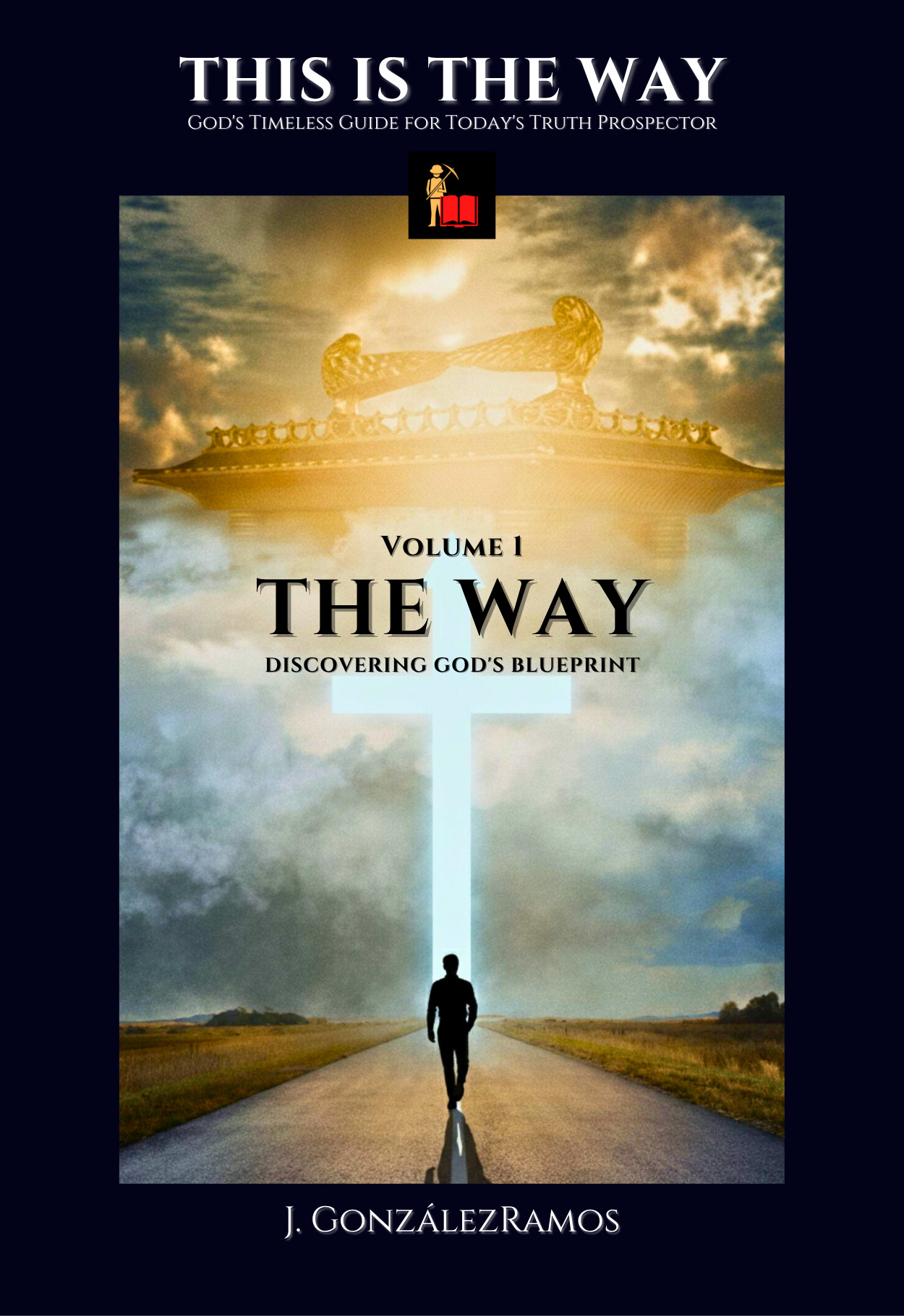
GET The Book: THE WAY: Discovering God’s Blueprint
What if the Bible’s key has been hidden in plain sight? Once you see it, Scripture will no longer seem scattered.
Sincere believers have pieced together disconnected verses, endured shallow teachings, and seen interpretations fail. The answer is the Biblical Sanctuary: God’s divine blueprint in Scripture from Genesis to Revelation. It’s not a human system but a pattern that unlocks prophecy, reveals Christ’s ministry, and turns fragmented knowledge into understanding.
LEARN The Core Pillars of Bible Study
Want to dig deeper into these truths? Explore The Core Pillars of Bible Study. Discover how Christ is the Center of all interpretation, why The Sanctuary is the Map for understanding God’s Word, and learn how Scripture is the Authority that interprets itself.
CONNECT WITH US:
Find Us on Social Media:
Legal “Stuff”
© 2026 The Word Miner Ministries