


There is a particular kind of tired that has nothing to do with sleep. You know it if you have ever left a spiritually intense gathering, the kind built around momentum and volume and a room full of people moving together toward the same emotional peak, and found yourself, a day or two later, strangely empty. Not just ordinary Tuesday-tired. Lower than before the gathering happened. As if something had been withdrawn rather than deposited.
That pattern deserves more attention than it usually gets, because most people interpret the crash as a personal failure. They assume the problem is their own inconsistency, their own inability to hold onto what they experienced. But what if the crash is actually diagnostic? What if it is telling you something true about where the experience came from in the first place?
Consider what an emotional peak actually requires to be produced. Music built for a swell. Lighting timed to a moment. Repetition designed to lower resistance and heighten suggestibility. None of these things are wrong in themselves, and none of them are unique to religious settings; a concert, a rally, and a worship service can use identical mechanisms to produce identical sensations. Which raises an honest question. If the mechanism is the same whether or not God is actually present, how would you know the difference between an encounter with Him and a well-executed emotional experience that simply happened to occur in a room with a cross in it?
This is not a cynical question. It is the question a serious person has to ask if they actually care whether their spiritual life is built on something real. And Scripture gives a strange, almost counterintuitive answer to it. “The sacrifices of God are a broken spirit, a broken and a contrite heart—these, O God, You will not despise” (Psalm 51:17, NKJV). Notice what is missing from that description. No triumph. No high. No swell of feeling. David wrote that after the worst failure of his life, in a state about as far from a spiritual peak as a person can be, and he called that state, not the highs that preceded his fall, the offering God actually accepts.
That should reorder what you are looking for. If the broken and searching heart is what God receives, then the measure of a real encounter with Him is not how elevated you felt in the moment but how honest you were seeing yourself by the end of it. Did the experience leave you impressed with what happened, or did it leave you examined? Those are not the same outcome, and they do not require the same kind of moment to produce them. A quiet, unremarkable hour of prayer that leaves you seeing something true and uncomfortable about your own heart has done something a stadium full of noise may never manage.
Here is what makes the manufactured peak so costly, beyond the crash itself. It teaches you to chase the wrong thing. Once a person has learned that spiritual life feels a certain way, elevated, loud, unmistakable, ordinary spiritual disciplines start to feel inadequate by comparison. Quiet prayer feels like nothing is happening. Careful reading of a difficult passage feels dry next to the memory of the last high. And so the pursuit shifts, almost without anyone noticing, from pursuing God to pursuing the sensation that used to accompany encountering Him. Those can look identical from the inside for a long time before the difference becomes obvious.
The solemn, searching kind of meeting rarely gets described as powerful, at least not in the moment. It tends to be quieter than that. People leave having faced something rather than having felt something, and the difference is not always pleasant. But ask which kind of meeting a person could actually build a life on. A high, by its nature, cannot be sustained; it either escalates or it fades, and escalation has a ceiling. A searched heart, though, changes something durable. It does not need to be topped the following week, because it was never measured by intensity to begin with.
None of this argues for coldness or for suspicion of every strong emotion in worship. A real encounter with God can absolutely move a person to tears, to trembling, to overwhelming gratitude. The question is not whether emotion was present. The question is what remained once the emotion passed. If the answer is nothing, if the morning after left you lower and hungrier for the next high rather than quieter and more searched, that is worth taking seriously rather than dismissing as an off day.
What would it look like this week to measure a spiritual experience, not by how it felt while it was happening, but by what kind of person it left behind an hour later?
Focus Verse: “The sacrifices of God are a broken spirit, a broken and a contrite heart—these, O God, You will not despise.” — Psalm 51:17 (NKJV)
Ready for Biblical Study That Goes Deeper Than Sunday School?
Join Truth Prospectors receiving systematic biblical teaching using Scripture-interpreting-Scripture methodology. No denominational filters. No shallow devotionals. Just the authority of God’s Word unlocking Christ’s complete ministry through the Sanctuary framework.
The Word Miner Ministries Resources
LISTEN to The Word Miner Podcast
Tired of surface-level Bible teaching? Join us as we tactically mine Scripture’s hidden treasures through sanctuary-based interpretation. Discover how systematic Bible study reveals Christ’s complete ministry and empowers you to unearth profound truths that denominational traditions often miss.

READ Our Daily Devotional: The Daily Shekinah Revival
Daily devotions restoring God’s glory within. A biblical devotional series that guides Truth Prospectors through daily encounters with God’s presence, using sanctuary typology and Scripture-centered teaching to restore authentic spiritual revival in the believer’s heart and life.

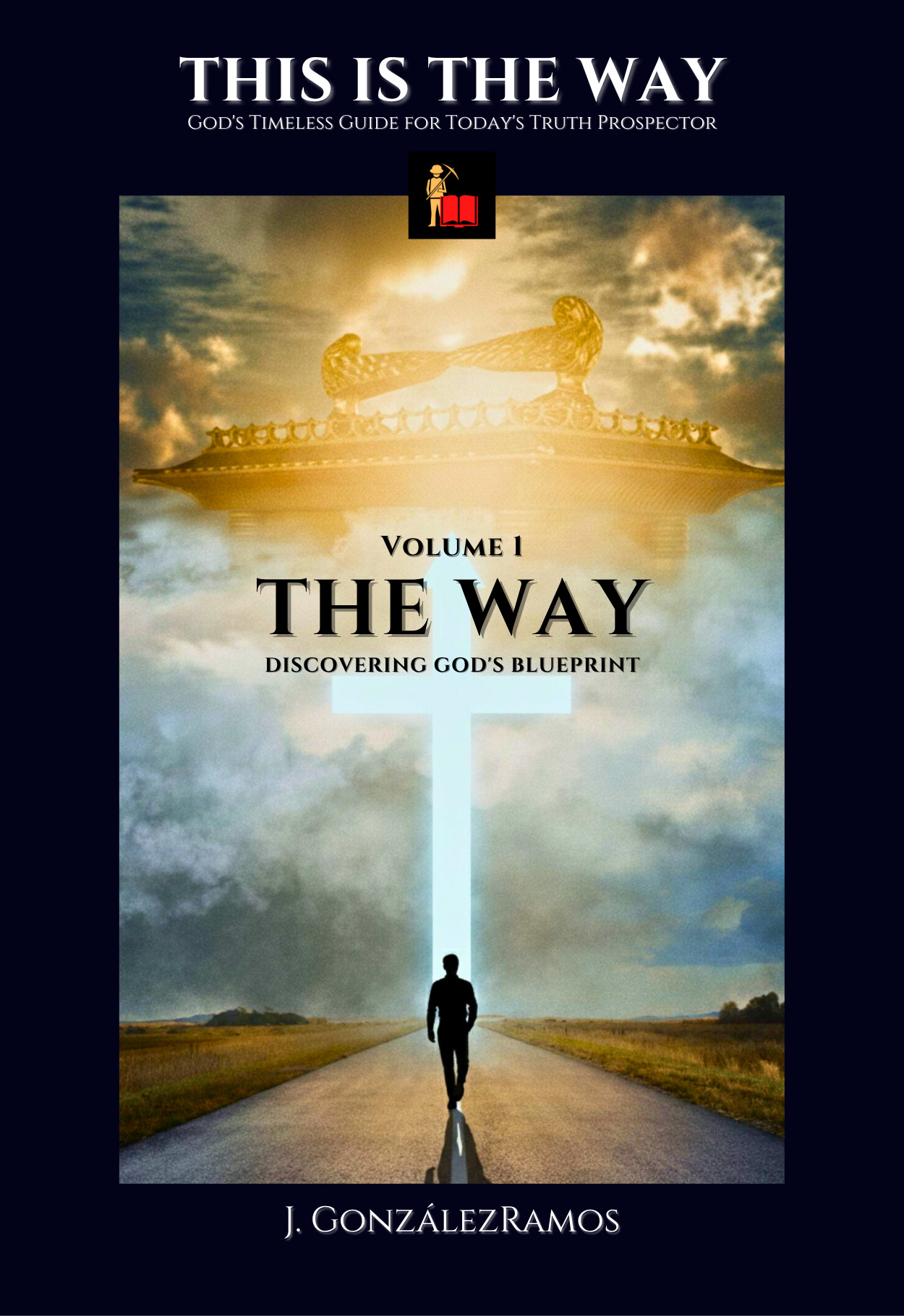
GET The Book: THE WAY: Discovering God’s Blueprint
What if the Bible’s key has been hidden in plain sight? Once you see it, Scripture will no longer seem scattered.
Sincere believers have pieced together disconnected verses, endured shallow teachings, and seen interpretations fail. The answer is the Biblical Sanctuary: God’s divine blueprint in Scripture from Genesis to Revelation. It’s not a human system but a pattern that unlocks prophecy, reveals Christ’s ministry, and turns fragmented knowledge into understanding.
LEARN The Core Pillars of Bible Study
Want to dig deeper into these truths? Explore The Core Pillars of Bible Study. Discover how Christ is the Center of all interpretation, why The Sanctuary is the Map for understanding God’s Word, and learn how Scripture is the Authority that interprets itself.
Connect With Us:
Find Us on Social Media:
Legal “Stuff”
© 2026 The Word Miner Ministries