


The story of Cain and Abel is one of the oldest in Scripture, and one of the most persistently misread.
The common reading frames it as a story about what kind of offering God prefers. Abel brought the firstborn of his flock. Cain brought produce from the ground. God accepted Abel’s offering and rejected Cain’s. And from that observation, a great deal of theological mileage has been extracted about the specific content of acceptable worship versus unacceptable worship.
But the text says something that the common reading tends to gloss over. “By faith Abel offered to God a more excellent sacrifice than Cain, through which he obtained witness that he was righteous” (Hebrews 11:4, NKJV). The distinction is not primarily what was offered. It is the faith through which it was offered. Abel’s sacrifice was accepted because it expressed a genuine interior reality of trust and dependence toward God. Cain’s was rejected because it did not. The form of the worship was present. The faith behind the form was absent. And without the faith, the form had no more merit before God than the counterfeit has value in the economy that the genuine currency was issued by.
This is the category the text points to when it says that good works of man are of no more value without faith in Jesus than was the offering of Cain. Not that moral conduct is worthless. Not that the effort to live well has no place in the Christian life. But that moral conduct detached from the faith that makes it genuine, separated from the interior reality of genuine trust and dependence and love toward God that gives the exterior its meaning, is operating in the wrong category entirely. It looks like worship. It has the form of righteousness. It does not have what righteousness actually is.
The world has a category called morality. Standards of conduct that most reasonable people would affirm. Honesty in transactions, care for others, the avoidance of obvious harm, the maintenance of social decency. These things are not nothing. A world in which they are generally observed is better than a world in which they are not. But they do not reach the divine standard. And the person who has substituted their maintenance of the world’s moral category for genuine engagement with the God whose standard is actually being evaluated against has made the same error Cain made. The offering is there. What the offering should be expressing is not.
“The LORD looks at the heart” (1 Samuel 16:7, NKJV). Not the appearance. Not the reputation. Not even the behavioral record, taken in isolation from what produced it. The heart that the behavior is expressing or concealing. The interior reality that the exterior form is either genuinely reflecting or decoratively covering.
Now here is what changes everything about this picture. The same text that disqualifies works done without faith also says that works covered with the merit of Christ testify to the worthiness of the doer to inherit eternal life. Not works as merit. Not works as payment. Works as testimony, which is the outward expression of an interior reality, offered through a faith that has genuinely connected to the One whose merit makes the offering acceptable. The tree whose fruit is covered in Christ’s righteousness is not a different tree from the one whose fruit it is. It is the same tree, producing what it genuinely produces, with the deficiency of what it produces covered by the One who supplies what the tree cannot supply for itself.
The morality that the world calls adequate does not reach the divine standard not because the divine standard is arbitrary but because the divine standard is reading something the world’s standard is not designed to read. The world’s standard evaluates behavior. The divine standard evaluates the interior that the behavior is expressing. And the interior that has genuinely been reached by faith in Christ is not the same interior that produces the world’s version of morality, however similar the behavioral outputs may appear from a certain distance.
The offering Cain brought was not rejected because it was wrong in its category. It was rejected because it was empty in its substance. The form without the faith is always going to produce the same result. And the form that is present without the faith that gives it substance is one of the most durable and most invisible spiritual conditions available, because it provides everything the form is supposed to provide — the sense of having fulfilled the requirement, the social signals of religious belonging, the comfortable impression that the relationship with God is in good standing — without requiring the interior engagement that genuine relationship with God actually involves.
The question that follows from the Cain story is not primarily about what kind of offering to bring. It is about what is in the person bringing the offering. The fruit reveals the tree. The offering reveals the heart. And the heart that has genuinely been reached by the faith that connects to Christ is the heart that produces an offering the merit of Christ can genuinely cover, because it is the genuine expression of what is genuinely there.
Focus Verse: “By faith Abel offered to God a more excellent sacrifice than Cain, through which he obtained witness that he was righteous.” — Hebrews 11:4 (NKJV)

Ready for Biblical Study That Goes Deeper Than Sunday School?
Join Truth Prospectors receiving systematic biblical teaching using Scripture-interpreting-Scripture methodology. No denominational filters. No shallow devotionals. Just the authority of God’s Word unlocking Christ’s complete ministry through the Sanctuary framework.
The Word Miner Ministries Resources
LISTEN to The Word Miner Podcast
Tired of surface-level Bible teaching? Join us as we tactically mine Scripture’s hidden treasures through sanctuary-based interpretation. Discover how systematic Bible study reveals Christ’s complete ministry and empowers you to unearth profound truths that denominational traditions often miss.

READ Our Daily Devotional: The Daily Shekinah Revival
Daily devotions restoring God’s glory within. A biblical devotional series that guides Truth Prospectors through daily encounters with God’s presence, using sanctuary typology and Scripture-centered teaching to restore authentic spiritual revival in the believer’s heart and life.

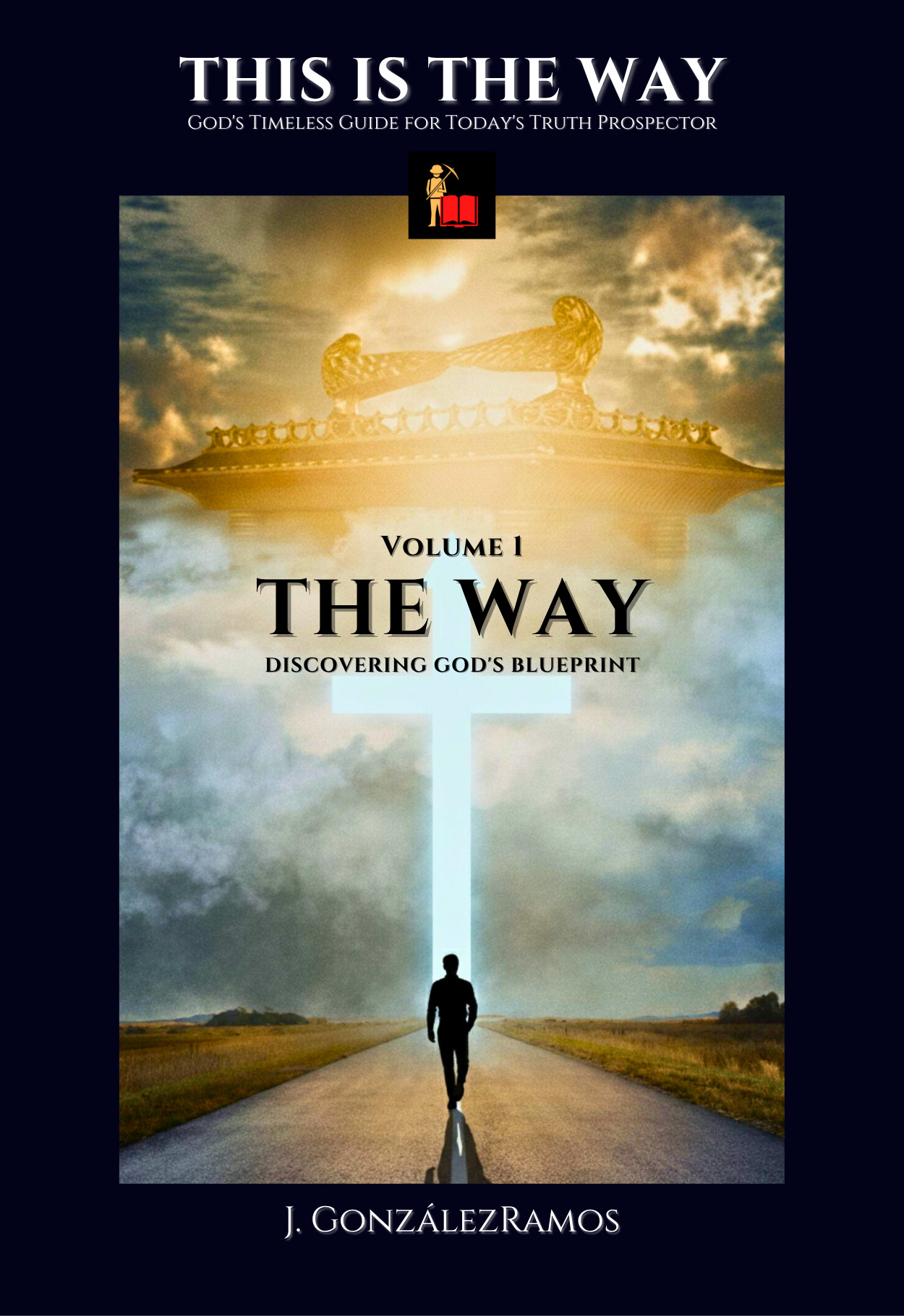
GET The Book: THE WAY: Discovering God’s Blueprint
What if the Bible’s key has been hidden in plain sight? Once you see it, Scripture will no longer seem scattered.
Sincere believers have pieced together disconnected verses, endured shallow teachings, and seen interpretations fail. The answer is the Biblical Sanctuary: God’s divine blueprint in Scripture from Genesis to Revelation. It’s not a human system but a pattern that unlocks prophecy, reveals Christ’s ministry, and turns fragmented knowledge into understanding.
LEARN The Core Pillars of Bible Study
Want to dig deeper into these truths? Explore The Core Pillars of Bible Study. Discover how Christ is the Center of all interpretation, why The Sanctuary is the Map for understanding God’s Word, and learn how Scripture is the Authority that interprets itself.
CONNECT WITH US:
Find Us on Social Media:
Legal “Stuff”
© 2026 The Word Miner Ministries