


There is a word in the New Testament that tends to get softened in translation until it loses its original force. Peter uses it when he writes, “Casting all your care upon Him, for He cares for you.” The Greek word behind “casting” is the same word used to describe what happened when the disciples threw their garments onto a donkey for Jesus to ride. It is not a gentle word. It is not the word for carefully setting something down. It is the word for throwing — a deliberate, decisive act that transfers weight from one place to another.
Which means the instruction is far more physical in its implication than most of us have allowed it to be. We tend to treat the verse as a statement of feeling, as if Peter were telling us to feel less anxious, to muster a sense of calm, to arrange our interior life into something quieter. But that is not what the word demands. Casting is an act, not an emotion. It is something done, not something felt.
So the question worth sitting with is this: what does it actually look like to cast something? What is the posture involved?
Consider what casting requires. It requires that you have, at some point, picked the thing up. You cannot throw what you have not held. Which means the act of casting presupposes a prior act of acknowledgment — an honest reckoning with the weight of what you have been carrying. The person who tries to cast without first acknowledging tends to go through a kind of performance, a pantomime of release that leaves the burden exactly where it was. This is probably why so many people report trying to cast their worries on God and finding themselves right back inside them twenty minutes later. They were performing a gesture, not making a decision.
The writer of Hebrews adds something here that sharpens the picture. He describes the life of faith as a race run with eyes fixed on a singular point, “looking unto Jesus, the author and finisher of our faith.” The phrase carries the idea of looking away from everything else in order to look at this one thing. It implies a prior field of vision — other things that were being looked at — and a deliberate reorientation of the gaze. The posture of faith is not the absence of distractions. It is the active choice to look away from them and toward something else.
This is the interior motion that corresponds to the physical act of casting. You pick up the weight. You name it with some degree of honesty. And then you throw it — not in a vague spiritual direction, but toward a Person who has specifically said He will carry what you cannot. The throwing and the looking are the same act, seen from two different angles.
Paul gives this posture its deepest grounding. He writes in Galatians, “I have been crucified with Christ; it is no longer I who live, but Christ lives in me; and the life which I now live in the flesh I live by faith in the Son of God, who loved me and gave Himself for me.” What strikes a careful reader here is not only the declaration but its tense. The crucifixion Paul describes is past tense. It has already happened. The death of the self that insists on carrying its own weight, managing its own security, solving its own impossible equations — that death is described as a completed act, not a goal to pursue.
Which raises an honest and somewhat unsettling question: if the death is already accomplished, why does the burden feel so present? Why does a person who claims to have died to self-sufficiency find themselves, day after day, picking the old weights back up?
Perhaps because dying and staying dead are not the same act. The crucifixion may be past tense in the cosmic sense without having yet become the practiced posture of an ordinary Tuesday. There is a difference between what has been accomplished and what has been inhabited. The life of faith, as Paul describes it, is the daily process of inhabiting what is already true — of learning to live from the place of trust rather than from the old reflex of control.
This is where the posture becomes a practice. Not a practice of achievement, as if the goal were to reach a state of permanent peace through sufficient effort. But a practice of return — a repeated, daily act of throwing what you have picked up back toward the One who said He would carry it. Some mornings this feels like a single motion. Other mornings it happens forty times before noon. The number of times required does not change the validity of the act.
Paul was not describing a life free from occasions for worry. He was describing a life in which worry has been deprived of its final authority. The cares still come. The weight is real. But somewhere in the repeated practice of casting — in the steady, unglamorous habit of looking away from the weight and toward the One who bears it — something shifts. Not all at once. Not dramatically. But the shift is real, and the person who persists long enough begins to recognize something in themselves that cannot quite be explained by any discipline they have managed.
They begin to discover what it means to know. Not to believe in the abstract, not to hope in the theoretical, but to know with the particular certainty that only comes from having committed something real to someone real and found that it held.
“For I know whom I have believed and am persuaded that He is able to keep what I have committed to Him until that Day.” — 2 Timothy 1:12 (NKJV)
Ready for Biblical Study That Goes Deeper Than Sunday School?
Join Truth Prospectors receiving systematic biblical teaching using Scripture-interpreting-Scripture methodology. No denominational filters. No shallow devotionals. Just the authority of God’s Word unlocking Christ’s complete ministry through the Sanctuary framework.
The Word Miner Ministries Resources
LISTEN to The Word Miner Podcast
Tired of surface-level Bible teaching? Join us as we tactically mine Scripture’s hidden treasures through sanctuary-based interpretation. Discover how systematic Bible study reveals Christ’s complete ministry and empowers you to unearth profound truths that denominational traditions often miss.

READ Our Daily Devotional: The Daily Shekinah Revival
Daily devotions restoring God’s glory within. A biblical devotional series that guides Truth Prospectors through daily encounters with God’s presence, using sanctuary typology and Scripture-centered teaching to restore authentic spiritual revival in the believer’s heart and life.

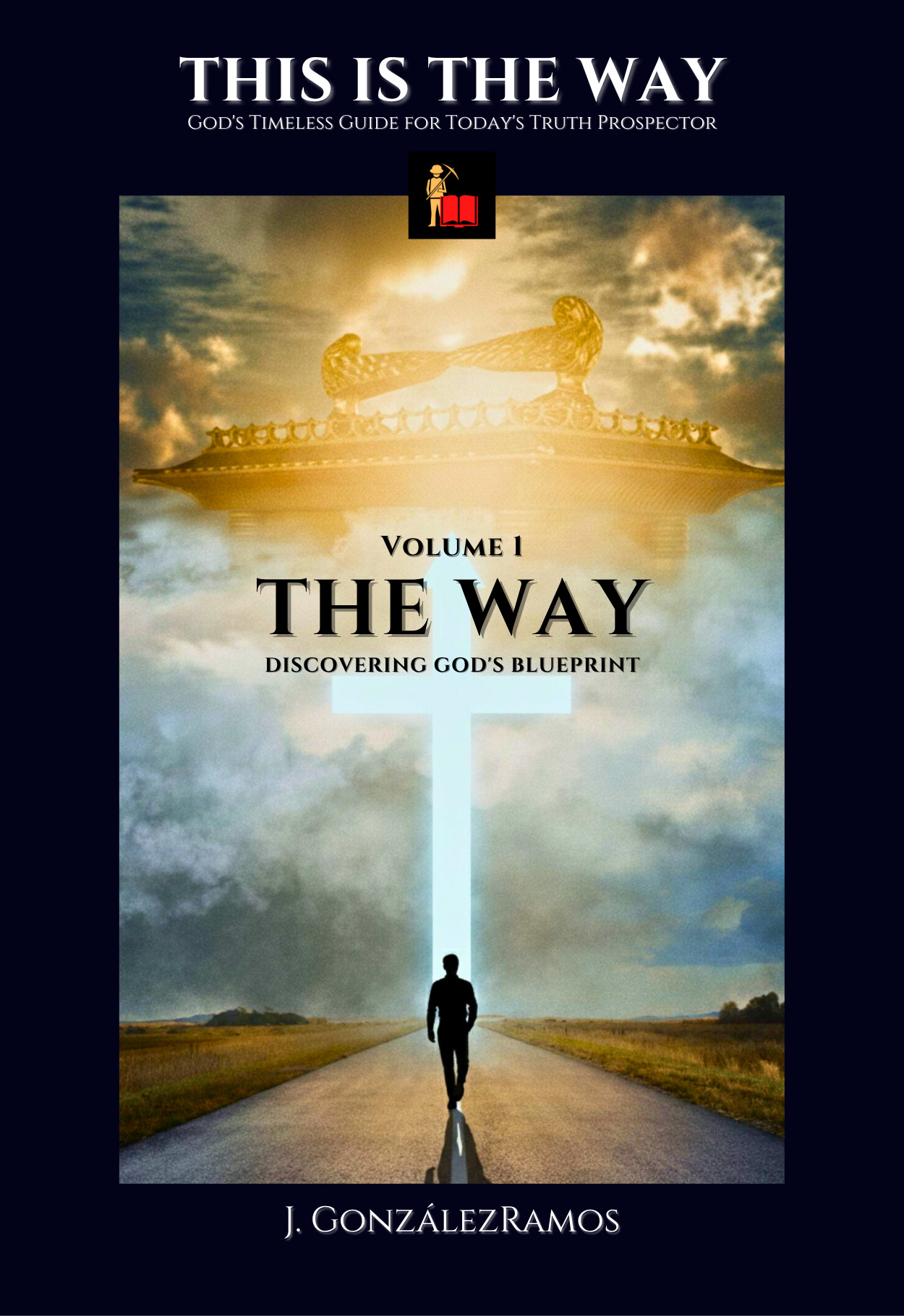
GET The Book: THE WAY: Discovering God’s Blueprint
What if the Bible’s key has been hidden in plain sight? Once you see it, Scripture will no longer seem scattered.
Sincere believers have pieced together disconnected verses, endured shallow teachings, and seen interpretations fail. The answer is the Biblical Sanctuary: God’s divine blueprint in Scripture from Genesis to Revelation. It’s not a human system but a pattern that unlocks prophecy, reveals Christ’s ministry, and turns fragmented knowledge into understanding.
LEARN The Core Pillars of Bible Study
Want to dig deeper into these truths? Explore The Core Pillars of Bible Study. Discover how Christ is the Center of all interpretation, why The Sanctuary is the Map for understanding God’s Word, and learn how Scripture is the Authority that interprets itself.
CONNECT WITH US:
Find Us on Social Media:
Legal “Stuff”
© 2026 The Word Miner Ministries