
Reading Between the Lines of Grace
Luke 15:11-32 • Hosea 11:1-4 • Leviticus 16:20-22 • Revelation 21:3-4
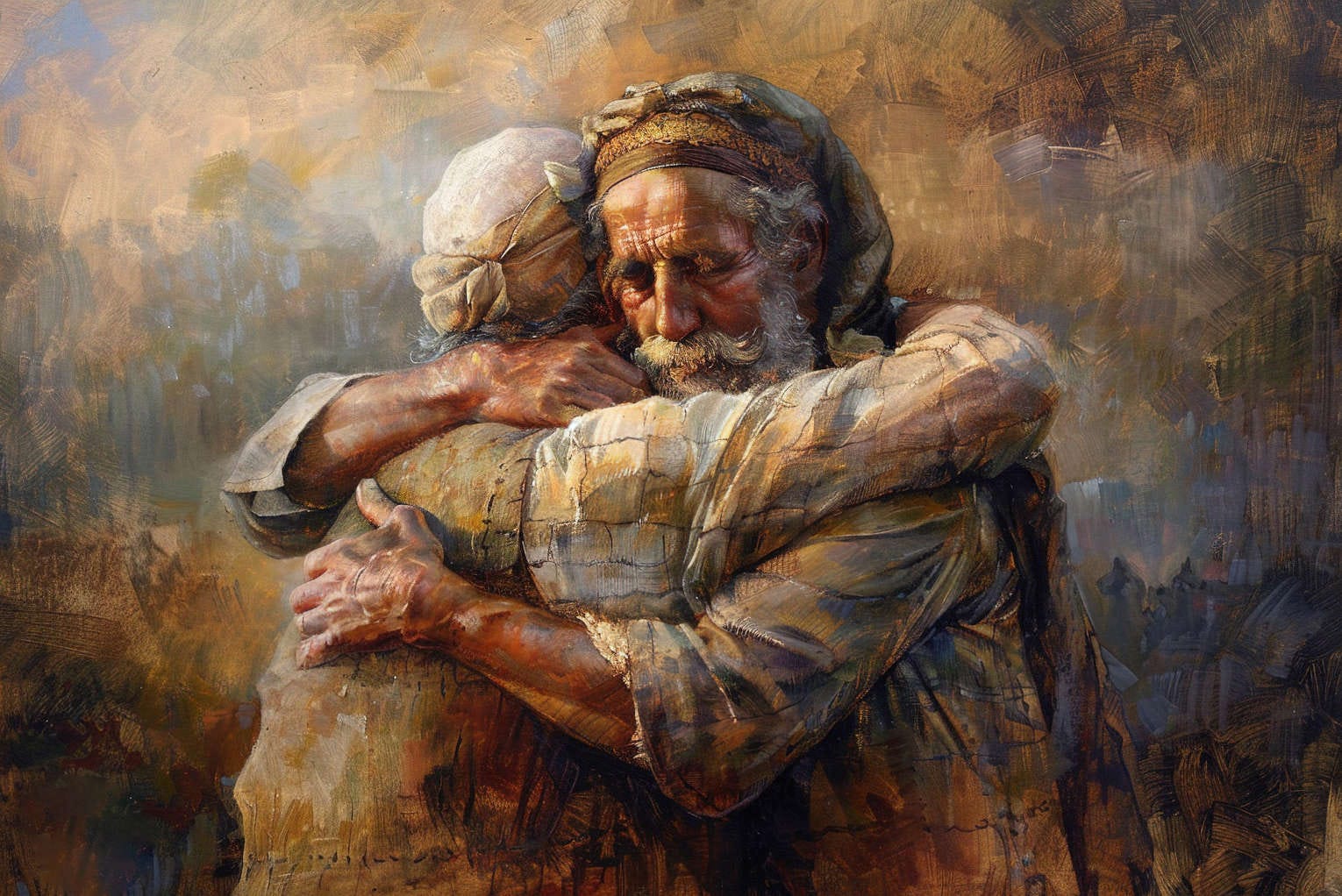
Everyone focuses on the son who squandered his inheritance. But let's talk about the Father who never stopped watching the road.
"When he was still a great way off, his father saw him" (Luke 15:20). You don't see someone at a great distance unless you're looking for them. How many days had this father climbed to the highest point of his property, shading his eyes against the sun, hoping today would be the day?
The robe, the ring, the celebration—none of it was hastily arranged. A father's love had been preparing for this moment since the day his boy first turned away.
The Sanctuary's Prodigal Pattern
But here's what most miss: Jesus wasn't telling a new story. He was revealing the sanctuary's deepest secret—that every ritual, every sacrifice, every Day of Atonement was the Father watching the road for His wayward children to come home.
Consider the daily sanctuary service. When a repentant sinner brought his lamb to the altar, he wasn't initiating God's love—he was responding to it. The Father had already provided the system, already established the way home, already made preparation for the moment when His child would "come to himself" and return (Luke 15:17).
The altar of burnt offering in the courtyard represents that first step back toward the Father's house. Like the prodigal's initial decision to return, the sinner recognizes his need and approaches God's dwelling place. But notice—the altar wasn't built after the sinner arrived. It was waiting there, always ready, because the Father knew His children would eventually need a way home.
The laver between the altar and the sanctuary proper mirrors the prodigal's transformation. Just as the father commanded, "Bring out the best robe and put it on him" (Luke 15:22), the cleansing at the laver represents the Father clothing His returning child with righteousness, washing away the stains of the far country.
The Father's Preparation in the Holy Place
The furniture in the Holy Place reveals the ongoing provisions the Father has made for His returning children. The table of showbread speaks of daily sustenance—the Father saying, "You were starving in the far country, but I have bread prepared for you every day." The seven-branched lampstand declares, "You were stumbling in darkness, but I have light ready to guide your path." The altar of incense whispers, "You couldn't pray in your rebellion, but I have been interceding for you, waiting for your return."
Every piece reveals a Father who hasn't been sitting idle, wondering IF His child will return, but actively preparing for WHEN he comes home. Like the prodigal's father who had the robe ready, the ring prepared, the celebration planned, our Heavenly Father has been working in the sanctuary, making everything ready for our restoration.
The Most Holy Place: The Father's Ultimate Welcome
But the deepest revelation comes in the Most Holy Place, where the mercy seat covers the law in the ark of the covenant. Here we see the Father's solution to the justice problem that the prodigal story only hints at.
When the earthly father welcomed his son, the older brother protested: "But as soon as this son of yours came, who has devoured your livelihood with harlots, you killed the fatted calf for him" (Luke 15:30). There's justice to consider—sin has consequences, debts must be paid, the law of cause and effect cannot simply be ignored.
The mercy seat reveals how our Heavenly Father solves this dilemma. Above the law sits the place where the blood of atonement is sprinkled. Justice and mercy meet at the mercy seat, where the Father's love satisfies the law's demands through the sacrifice of His Son. The prodigal can be welcomed home not because the Father ignores justice, but because Christ has satisfied it completely.
The Scapegoat: The Far Country's Ultimate Destination
The Day of Atonement ritual reveals what the parable only implies—the ultimate fate of rebellion itself. After the sanctuary is cleansed by the Lord's goat, the scapegoat bearing the sins is led into the wilderness to perish (Leviticus 16:20-22). This represents Satan, the original prodigal who led the rebellion in the far country of this world, finally bearing his responsibility for all the sin he instigated.
The prodigal son represents those who, like Israel, eventually "come to themselves" and return to the Father. But there's another destiny for those who, like the devil, refuse to acknowledge their need and persist in rebellion. The scapegoat's wilderness journey prophetically points to Satan's thousand-year banishment to this desolate earth (Revelation 20:1-3), followed by his final destruction.
The Eschatological Homecoming
The parable's joyful reunion points toward the ultimate fulfillment when the Father's house is finally restored. "Behold, the tabernacle of God is with men, and He will dwell with them, and they shall be His people. God Himself will be with them and be their God" (Revelation 21:3).
This is what the earthly father's celebration could only foreshadow—the day when all of God's prodigal children are gathered home, when the sanctuary's work is complete, and the Father can dwell directly with His family without the need for altars, lavers, or veils to separate holiness from sinfulness.
The "best robe" the earthly father provided becomes the white robes of righteousness worn by the redeemed (Revelation 7:14). The ring on the finger becomes the seal of God in their foreheads (Revelation 7:3). The celebration with music and dancing becomes the eternal song of the redeemed around the throne (Revelation 15:3).
The Father's Eternal Vigil
But until that day, our Heavenly Father continues His vigil. From the heavenly sanctuary, Christ our High Priest watches for every soul who might "come to himself" and turn toward home. The investigative judgment now proceeding in heaven's Most Holy Place isn't cold legal examination—it's the Father reviewing every name in the book of life, hoping to find evidence of repentance, faith, and the desire to return home.
Every prayer that ascends, every act of faith, every step toward righteousness is the Father seeing His child "still a great way off" but moving in the right direction. And like the earthly father, He's already preparing the welcome—not hastily arranged, but planned from the foundation of the world.
Our Heavenly Father doesn't wait for us to clean ourselves up before coming home. He's watching the road, robe of righteousness in hand, ready to cover our shame with His own perfect character. The sanctuary system isn't a barrier to overcome—it's the pathway He's prepared, the provision He's made, the welcome He's planned for every prodigal who chooses to come home.
Reflection Questions:
How does understanding the sanctuary as the Father's "prodigal preparation" change your view of Old Testament rituals?
What does it mean that the altar was already waiting before you recognized your need to return?
How does the mercy seat reveal the Father's solution to the justice problem in welcoming home rebellious children?
What comfort do you find in knowing that Christ is currently in the heavenly sanctuary, watching for your continued journey toward home?