

There is a detail in John 15 that is easy to read past, and that most people do read past, because it is uncomfortable enough that the mind tends to soften it on the way in.
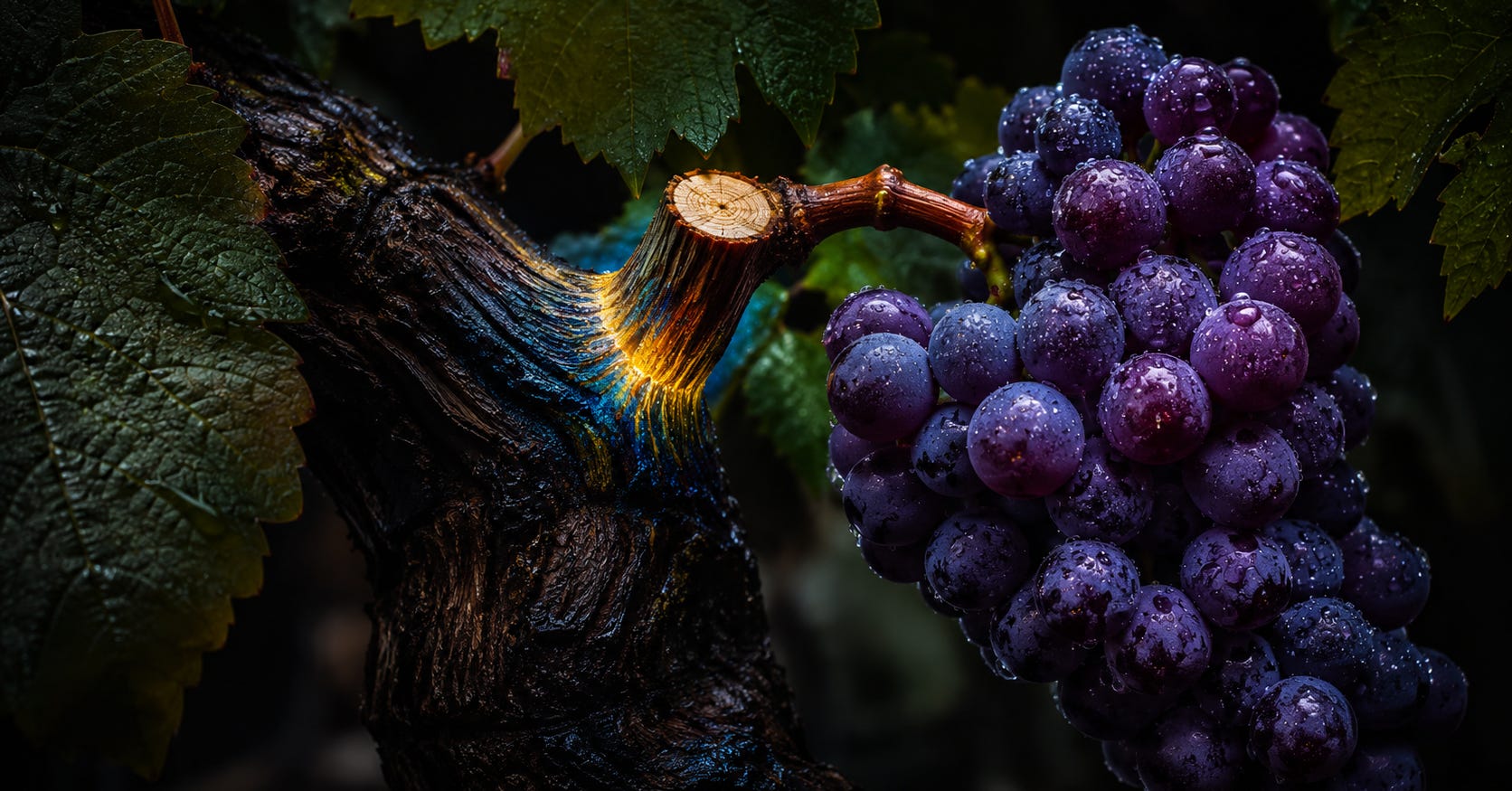
Jesus describes two different things that happen to two different categories of branches. The first category is branches that are in the vine and bearing fruit. They get the pruning knife. They are cut back, shaped, reduced, and the cutting is done by the Father Himself. It hurts. It removes things that feel like they were supposed to stay. But the purpose is more fruit. The pruning is an act of cultivation that treats the branch as a living thing worth investing in.
The second category is branches that are in the vine and not bearing fruit. They do not get the pruning knife. They get removed entirely. “Every branch in Me that does not bear fruit He takes away; and every branch that bears fruit He prunes, that it may bear more fruit” (John 15:2, NKJV). The cutting is the same in both cases. What differs is what the cutting is doing. One is pruning that promotes growth. The other is severance that ends a connection that was either never real or has become entirely nonfunctional.
This is the rule the text gives by which the true disciple may be distinguished from the one who claims to follow Christ but has not the genuine faith in Him that produces the connection. The fruit-bearing branch and the fruitless branch. Not identified by what they profess but by what they produce. Not distinguished by the external markers of religious life but by what those markers are expressing or failing to express.
“You will know them by their fruits” (Matthew 7:16, NKJV). This is not a complicated diagnostic. A fruit-bearing tree and a fruitless one are distinguishable by anyone willing to look at them honestly. The difficulty is not the diagnostic itself. The difficulty is applying it to oneself with the same honest attention you would apply it to someone else.
Now here is what is important to hold carefully in understanding the pruning. The branch that is genuinely connected to the vine and producing fruit is not exempt from the cutting. The cultivation of a fruitful life involves the removal of things that are crowding out the fruit. Habits that were not sinful in themselves but were taking up space that could be producing something better. Relationships that were draining without developing. Ambitions that were legitimate but were displacing what was most important. The pruning knife comes for all of those. And it comes from the Father, not as punishment but as investment.
Hebrews 12:11 describes the experience of this kind of discipline with great honesty: “No chastening seems to be joyful for the present, but painful; nevertheless, afterward it yields the peaceable fruit of righteousness to those who have been trained by it” (NKJV). The afterward is the key word. The discipline produces something the undisciplined vine cannot produce. But the production requires the training, and the training requires the cutting, and the cutting is something the branch has to remain in the vine to survive.
The fruitless branch does not get this treatment. And the reason it does not get this treatment is that the connection is not there to sustain what the pruning would do. You do not prune a branch that has no life in it. You remove it. Because the purpose of the pruning is to serve the fruit production of a living connection, and where the living connection is absent, the pruning has nothing to work with.
Here is the question worth sitting with. When difficulty and loss and reduction have arrived in your life, what has been your interpretive frame for them? Because the answer to that question reveals something about your understanding of what your relationship with the Vine actually is.
The branch that experiences the pruning knife and understands what it is for receives the discipline differently from the branch that experiences hardship as arbitrary suffering. The first person allows the cutting to do what it was designed to do. They release what is being removed rather than defending it. They trust that the One who is cutting knows more about the shape of the branch than the branch does about itself. And in that trust, the cutting produces exactly what it was designed to produce: a branch better positioned to bring forth more fruit than the uncut version could have managed.
That posture requires a genuine understanding of the relationship. And that understanding comes most reliably from an interior knowledge of who the Vinedresser is and what the vine is for. Which is, again, a question about the reality of the connection rather than its appearance.
Focus Verse: “Every branch in Me that does not bear fruit He takes away; and every branch that bears fruit He prunes, that it may bear more fruit.” — John 15:2 (NKJV)
Ready for Biblical Study That Goes Deeper Than Sunday School?
Join Truth Prospectors receiving systematic biblical teaching using Scripture-interpreting-Scripture methodology. No denominational filters. No shallow devotionals. Just the authority of God’s Word unlocking Christ’s complete ministry through the Sanctuary framework.
The Word Miner Ministries Resources
LISTEN to The Word Miner Podcast
Tired of surface-level Bible teaching? Join us as we tactically mine Scripture’s hidden treasures through sanctuary-based interpretation. Discover how systematic Bible study reveals Christ’s complete ministry and empowers you to unearth profound truths that denominational traditions often miss.

READ Our Daily Devotional: The Daily Shekinah Revival
Daily devotions restoring God’s glory within. A biblical devotional series that guides Truth Prospectors through daily encounters with God’s presence, using sanctuary typology and Scripture-centered teaching to restore authentic spiritual revival in the believer’s heart and life.

GET The Book: THE WAY: Discovering God’s Blueprint
What if the Bible’s key has been hidden in plain sight? Once you see it, Scripture will no longer seem scattered.
Sincere believers have pieced together disconnected verses, endured shallow teachings, and seen interpretations fail. The answer is the Biblical Sanctuary: God’s divine blueprint in Scripture from Genesis to Revelation. It’s not a human system but a pattern that unlocks prophecy, reveals Christ’s ministry, and turns fragmented knowledge into understanding.
LEARN The Core Pillars of Bible Study
Want to dig deeper into these truths? Explore The Core Pillars of Bible Study. Discover how Christ is the Center of all interpretation, why The Sanctuary is the Map for understanding God’s Word, and learn how Scripture is the Authority that interprets itself.
CONNECT WITH US:
Find Us on Social Media:
Legal “Stuff”
© 2026 The Word Miner Ministries