
To the Uttermost
The completeness of Christ's offering for the most difficult case


The word uttermost is worth stopping on.
It appears in one of the most decisive statements in the book of Hebrews, in a context that is addressing the adequacy of Christ’s priesthood compared to the Levitical priests who preceded Him. The Levitical priests were temporary. They died and were replaced. They offered sacrifices that had to be repeated because the offering was never complete in itself. But Christ, the text says, “always lives to make intercession for them. Therefore He is also able to save to the uttermost those who come to God through Him, since He always lives to make intercession for them” (Hebrews 7:25, NKJV). The uttermost is the boundary of the claim. And the boundary is: there is no boundary.
There is no category of person too far gone for this provision. No history too entangled. No sin too ingrained. No pattern too entrenched. The uttermost is not a descriptive term for how much Christ can save the relatively average sinner. It is the deliberate removal of any upper limit on what the interceding, living, always-present High Priest is capable of doing for the person who comes to God through Him.
This is a complete offering. Not a partial solution that addresses the more manageable cases. Not a provision scaled to the level of difficulty that the average person presents. An infinite sacrifice applied to whatever the actual need of the actual person actually is, with enough left over that the supply was not diminished by the application. “But where sin abounded, grace abounded much more” is not only a general principle. It is the specific description of a transaction in which the sin, however great it was, did not exhaust the grace provided to address it.
But the completeness of the offering has a purpose that extends beyond the transaction of forgiveness. The text describes what the mighty Saviour comes to do: to reveal the Father, to reconcile the person to God, to make them a new creature renewed after the image of Him who created them. The goal is not simply the removal of the prior record. It is the restoration of a relationship and the reshaping of a person. “If anyone is in Christ, he is a new creation; old things have passed away; behold, all things have become new” (2 Corinthians 5:17, NKJV). New creation. Not improved old creation. Not repaired old creation. A genuinely new thing, with new capacities and a new orientation, whose identity is defined not by what it was before the transaction but by the One in whom the transaction occurred.
Colossians 1:21-22 describes the extent of the reconciliation in terms that should settle the question of whether anyone is too far gone for it: “And you, who once were alienated and enemies in your mind by wicked works, yet now He has reconciled in the body of His flesh through death, to present you holy, and blameless, and above reproach in His sight” (NKJV). The starting condition described is not mild disengagement from God. It is alienation and enmity. The distance being bridged is not a small one. And the reconciliation accomplished through the body of His flesh, through the actual death of the actual person who is the infinite sacrifice, covers the full distance. Not partially. To the uttermost.
The person for whom this provision was made can count on it. Not as a vague hope that things will probably work out, but as the specific confidence that an infinite sacrifice applied to a finite problem is going to be sufficient, that a complete offering has covered everything the need requires, that a Saviour who always lives to intercede is not going to fail to employ the power His own atonement purchased.
That confidence, grounded in the character and completeness of the One who provided it, produces something in the interior of the person who holds it that does not come from any other source.
Focus Verse: “Therefore He is also able to save to the uttermost those who come to God through Him, since He always lives to make intercession for them.” — Hebrews 7:25 (NKJV)
Ready for Biblical Study That Goes Deeper Than Sunday School?
Join Truth Prospectors receiving systematic biblical teaching using Scripture-interpreting-Scripture methodology. No denominational filters. No shallow devotionals. Just the authority of God’s Word unlocking Christ’s complete ministry through the Sanctuary framework.
The Word Miner Ministries Resources
LISTEN to The Word Miner Podcast
Tired of surface-level Bible teaching? Join us as we tactically mine Scripture’s hidden treasures through sanctuary-based interpretation. Discover how systematic Bible study reveals Christ’s complete ministry and empowers you to unearth profound truths that denominational traditions often miss.

READ Our Daily Devotional: The Daily Shekinah Revival
Daily devotions restoring God’s glory within. A biblical devotional series that guides Truth Prospectors through daily encounters with God’s presence, using sanctuary typology and Scripture-centered teaching to restore authentic spiritual revival in the believer’s heart and life.

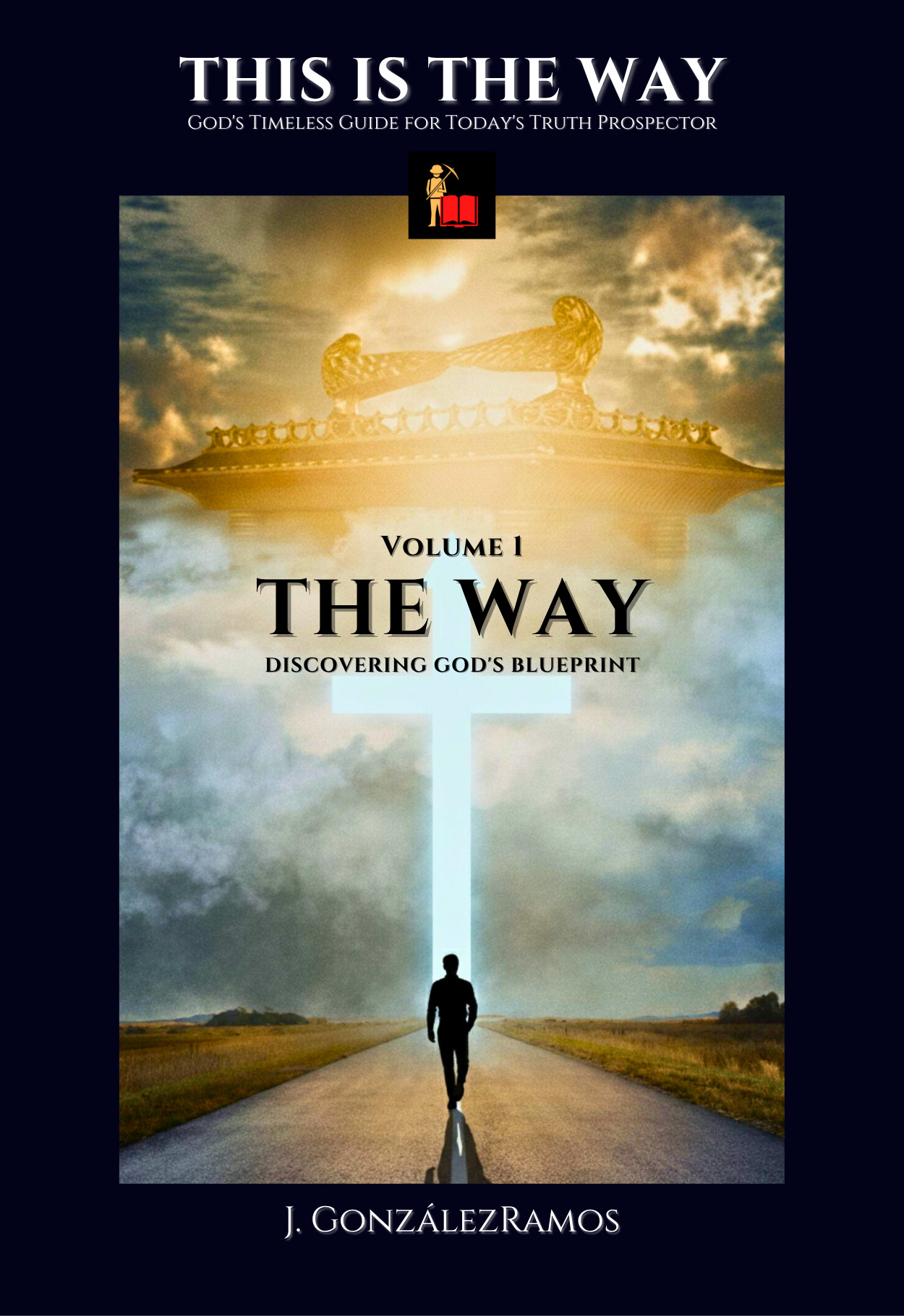
GET The Book: THE WAY: Discovering God’s Blueprint
What if the Bible’s key has been hidden in plain sight? Once you see it, Scripture will no longer seem scattered.
Sincere believers have pieced together disconnected verses, endured shallow teachings, and seen interpretations fail. The answer is the Biblical Sanctuary: God’s divine blueprint in Scripture from Genesis to Revelation. It’s not a human system but a pattern that unlocks prophecy, reveals Christ’s ministry, and turns fragmented knowledge into understanding.
LEARN The Core Pillars of Bible Study
Want to dig deeper into these truths? Explore The Core Pillars of Bible Study. Discover how Christ is the Center of all interpretation, why The Sanctuary is the Map for understanding God’s Word, and learn how Scripture is the Authority that interprets itself.
CONNECT WITH US:
Find Us on Social Media:
Legal “Stuff”
© 2026 The Word Miner Ministries