

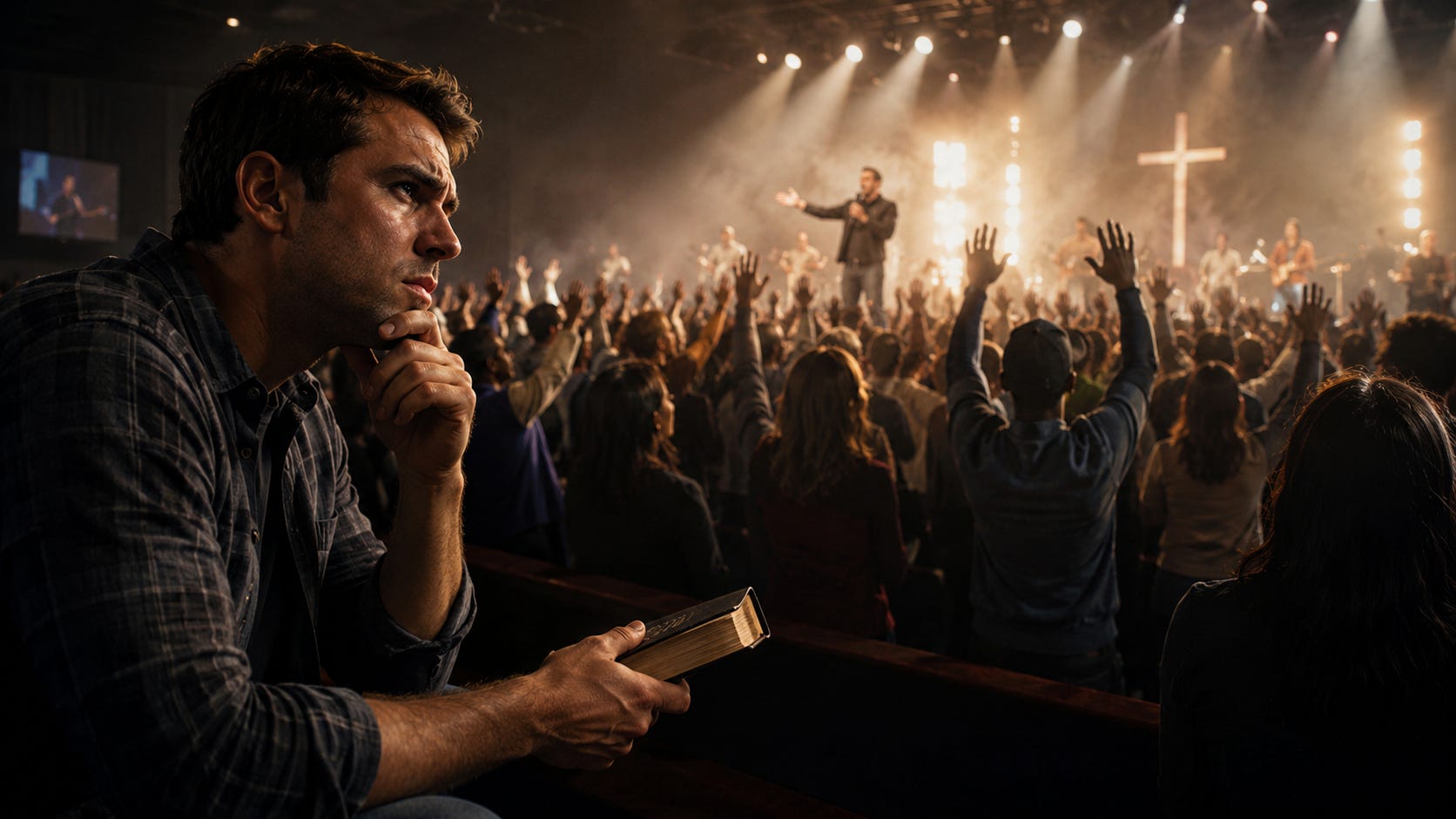
What if a religious experience could be loud, emotional, and entirely convincing to everyone in the room, and still not be from God?
That possibility unsettles people, and it should. We tend to assume that intensity is evidence. If something moves us powerfully enough, we stop asking what moved us and start assuming it must have been the Spirit, because what else could produce a feeling that strong? But intensity has never been a reliable witness. A crowd can be moved to tears by a eulogy for someone they never met. A stadium can erupt at a song built entirely out of chord progressions engineered to trigger a swell of feeling. Feeling is real. It just is not, by itself, a verdict on its source.
Scripture takes this question seriously enough to give believers an actual filter rather than leaving them to guess. “Beloved, do not believe every spirit, but test the spirits, whether they are of God; because many false prophets have gone out into the world” (1 John 4:1, NKJV). Notice what that verse assumes. It assumes that something can present itself as spiritual and not be. It assumes that the burden of discernment falls on the believer, not on the phenomenon to announce its own credentials. And it assumes that testing is not an act of unbelief. Testing is what belief looks like when it refuses to be careless with something this important.
So what does the test actually check for? Paul, writing to a church that had real spiritual gifts operating alongside real confusion about them, kept returning to one criterion above all others: can anyone understand it, and does it build anyone up? “Let all things be done for edification” (1 Corinthians 14:26, NKJV). Not for spectacle. Not for the sensation of the moment. For edification, which means the actual, lasting construction of someone’s faith. A manifestation that produces noise but not understanding, excitement but not growth, has failed the one test that mattered from the beginning.
Think about what it would mean for something to be unrecognizable. Not simply unfamiliar to the people watching, but unrecognizable at the source. A sound with no content behind it, offered as revelation, understood by no one, including the one making it. What would that actually be? It would not be communication. Communication requires a message that travels from one mind to another. Strip away the message and you are left with the performance of communication without its substance, and performance can be manufactured by anyone willing to work hard enough at it.
This is where the question gets uncomfortable, because it does not stay confined to dramatic or unusual phenomena. The same test applies to the quieter version of the same mistake. A worship experience judged entirely by whether it produced chills. A prayer evaluated by how emotional it felt to pray it. A sermon graded on energy rather than truth. In every case the same substitution has occurred: the sensation has replaced the substance, and because the sensation is easier to produce and easier to verify in the moment, it quietly becomes the thing being pursued.
Here is what makes this a real difficulty rather than simply a matter of being more suspicious. The early church did have real spiritual gifts. Paul does not tell the Corinthians to stop desiring them; he tells them to desire them and use them rightly, in a way that serves other people rather than the performer. “God is not the author of confusion but of peace” (1 Corinthians 14:33, NKJV). The presence of confusion, then, is not neutral. It is information. Where God is actually at work, the fruit is order, clarity, and peace, even when the content of what is happening is unfamiliar or unusual. Where confusion multiplies and no one, including the person supposedly speaking, can account for what was said or why, something else is filling the space that was meant for the Spirit.
None of this is a call toward coldness or suspicion of every strong feeling that shows up in worship. It is a call toward a different question than the one most people instinctively ask. Not, did that feel powerful? But, did that produce understanding? Did it build someone up in a way they could carry out the door and use? Did it leave behind something that could survive contact with an ordinary Tuesday, or did it evaporate the moment the room went quiet again?
That question is not comfortable, because it requires you to examine experiences you might otherwise have simply enjoyed and moved on from. But an experience that cannot be tested is also an experience that cannot be trusted, no matter how convincing it felt while it was happening. And if the standard is real, it applies both to the dramatic moments everyone notices and to the quiet ones almost no one examines.
So here is the thought worth sitting with as the week opens. If something in your spiritual life right now cannot be explained, cannot be understood, and has produced no lasting change you could point to, what exactly are you calling it, and on what basis?
Focus Verse: “Beloved, do not believe every spirit, but test the spirits, whether they are of God; because many false prophets have gone out into the world.” — 1 John 4:1 (NKJV)
Ready for Biblical Study That Goes Deeper Than Sunday School?
Join Truth Prospectors receiving systematic biblical teaching using Scripture-interpreting-Scripture methodology. No denominational filters. No shallow devotionals. Just the authority of God’s Word unlocking Christ’s complete ministry through the Sanctuary framework.
The Word Miner Ministries Resources
LISTEN to The Word Miner Podcast
Tired of surface-level Bible teaching? Join us as we tactically mine Scripture’s hidden treasures through sanctuary-based interpretation. Discover how systematic Bible study reveals Christ’s complete ministry and empowers you to unearth profound truths that denominational traditions often miss.

READ Our Daily Devotional: The Daily Shekinah Revival
Daily devotions restoring God’s glory within. A biblical devotional series that guides Truth Prospectors through daily encounters with God’s presence, using sanctuary typology and Scripture-centered teaching to restore authentic spiritual revival in the believer’s heart and life.

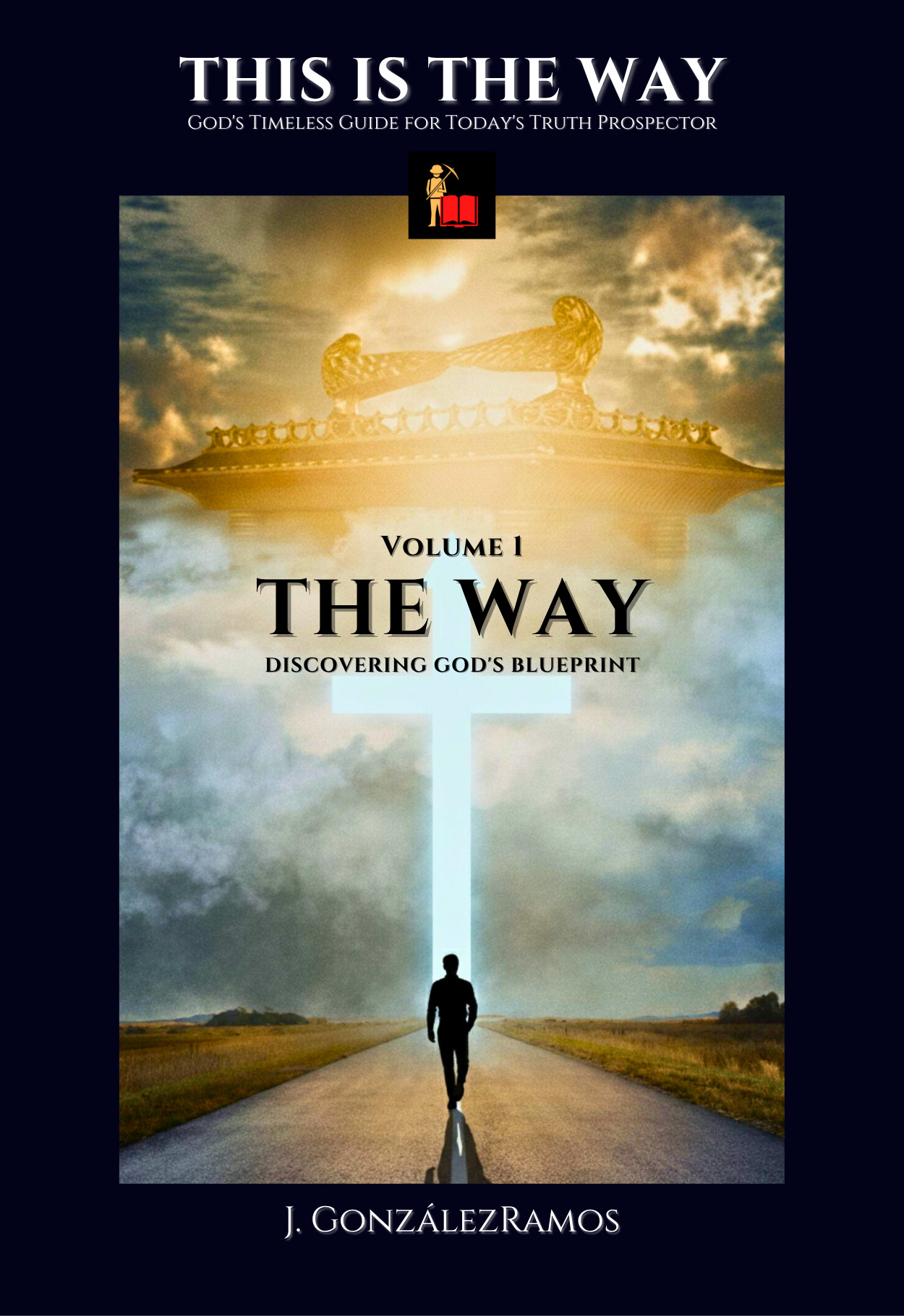
GET The Book: THE WAY: Discovering God’s Blueprint
What if the Bible’s key has been hidden in plain sight? Once you see it, Scripture will no longer seem scattered.
Sincere believers have pieced together disconnected verses, endured shallow teachings, and seen interpretations fail. The answer is the Biblical Sanctuary: God’s divine blueprint in Scripture from Genesis to Revelation. It’s not a human system but a pattern that unlocks prophecy, reveals Christ’s ministry, and turns fragmented knowledge into understanding.
LEARN The Core Pillars of Bible Study
Want to dig deeper into these truths? Explore The Core Pillars of Bible Study. Discover how Christ is the Center of all interpretation, why The Sanctuary is the Map for understanding God’s Word, and learn how Scripture is the Authority that interprets itself.
Connect With Us:
Find Us on Social Media:
Legal “Stuff”
© 2026 The Word Miner Ministries