


What does the direction of your actual life say about the God you claim to know?
John puts the tension with a bluntness that is difficult to soften: “He who says, ‘I know Him,’ and does not keep His commandments, is a liar, and the truth is not in him” (1 John 2:4, NKJV). That is not harsh language designed to produce guilt. It is a structural observation about the relationship between knowledge and its evidence. Genuine knowledge of a person, the kind of knowing that the Bible uses when it speaks of knowing God, is not an intellectual position that can be held independently of the relationship it refers to. It is a living connection that produces corresponding fruit. Where the fruit is structurally absent, the connection being asserted is not what it claims to be.
Jesus says the same thing from a different angle in Matthew 7:21: “Not everyone who says to Me, ‘Lord, Lord,’ shall enter the kingdom of heaven, but he who does the will of My Father in heaven” (NKJV). The people saying Lord, Lord are not casual participants in religion. They are confident confessors who appear to have no question about the sincerity of their relationship. And what Jesus identifies as the decisive factor is not the sincerity of the confession but the correspondence between the life and the will of the Father. Not the saying but the doing.
Now hold that alongside what the easy-going, crossless religion produces. A person who speaks the language of faith and maintains the form of religious identity while the underlying direction of the life stays accommodated to personal preference. A person whose faith has been kept comfortable by a careful, largely unconscious selection of which parts of Scripture to hold closely and which parts to hold loosely. A person who has heard a great deal about grace and considerably less about what grace is actually for, which is not the underwriting of a life pointed wherever the person wants to point it, but the transformation of the life and the covering of deficiency in the person genuinely turning toward God.
The question that emerges when these two things sit next to each other is not primarily a question about whether a person is saved. That is between the person and God and is not the kind of question a weekly devotional is positioned to answer on anyone’s behalf. The question is whether the faith being carried is the kind that is alive. Whether the life attached to the confession is actually moving in the direction the confession points.
Because here is where the other piece comes back into view. The person who brings sincere disposition and genuine effort toward God, who is actually moving in the direction of obedience even imperfectly, who is bearing something like a cross rather than a comfortable religious accessory, that person is not left alone in the gap between their effort and what obedience fully requires. The merit that covers deficiency is extended to them. The grace that is sufficient is available precisely at the point where their own resources run out. “God resists the proud, but gives grace to the humble” (James 4:6, NKJV). The grace flows toward the person who has dropped the pretense of having it handled.
The two things together draw a picture that is neither crushing nor comfortable in the wrong sense. The standard is real. The covering of deficiency is also real. The self-denial is required. The divine assistance in sustaining it is also available. And the person who is genuinely in the picture, genuinely bringing what they have toward God while leaning on the merit of Christ to cover what they cannot bring, is in a completely different position than the person who is using the language of grace to avoid the question of what the cross actually asks.
The two things together draw a picture that is neither crushing nor comfortable in the wrong sense. The standard is real. The covering of deficiency is also real. The self-denial is required. The divine assistance in sustaining it is also available. And the person who is genuinely in the picture, genuinely bringing what they have toward God while leaning on the merit of Christ to cover what they cannot bring, is in a completely different position than the person who is using the language of grace to avoid the question of what the cross actually asks.
Where the cross is being taken up, however imperfectly and however daily, the merit that covers deficiency is at work in the life carrying it. The disposition and the effort are accepted. The gaps are covered. And the faith that is operating in this way is not a do-nothing faith; it is the working, active, directional faith that produces fruit because it is genuinely connected to its source.
What that looks like when it has been running for a while is something more surprising than either the demand or the provision, taken separately, would suggest.
Focus Verse: “He who says, ‘I know Him,’ and does not keep His commandments, is a liar, and the truth is not in him.” — 1 John 2:4 (NKJV)

Ready for Biblical Study That Goes Deeper Than Sunday School?
Join Truth Prospectors receiving systematic biblical teaching using Scripture-interpreting-Scripture methodology. No denominational filters. No shallow devotionals. Just the authority of God’s Word unlocking Christ’s complete ministry through the Sanctuary framework.
The Word Miner Ministries Resources
LISTEN to The Word Miner Podcast
Tired of surface-level Bible teaching? Join us as we tactically mine Scripture’s hidden treasures through sanctuary-based interpretation. Discover how systematic Bible study reveals Christ’s complete ministry and empowers you to unearth profound truths that denominational traditions often miss.

READ Our Daily Devotional: The Daily Shekinah Revival
Daily devotions restoring God’s glory within. A biblical devotional series that guides Truth Prospectors through daily encounters with God’s presence, using sanctuary typology and Scripture-centered teaching to restore authentic spiritual revival in the believer’s heart and life.

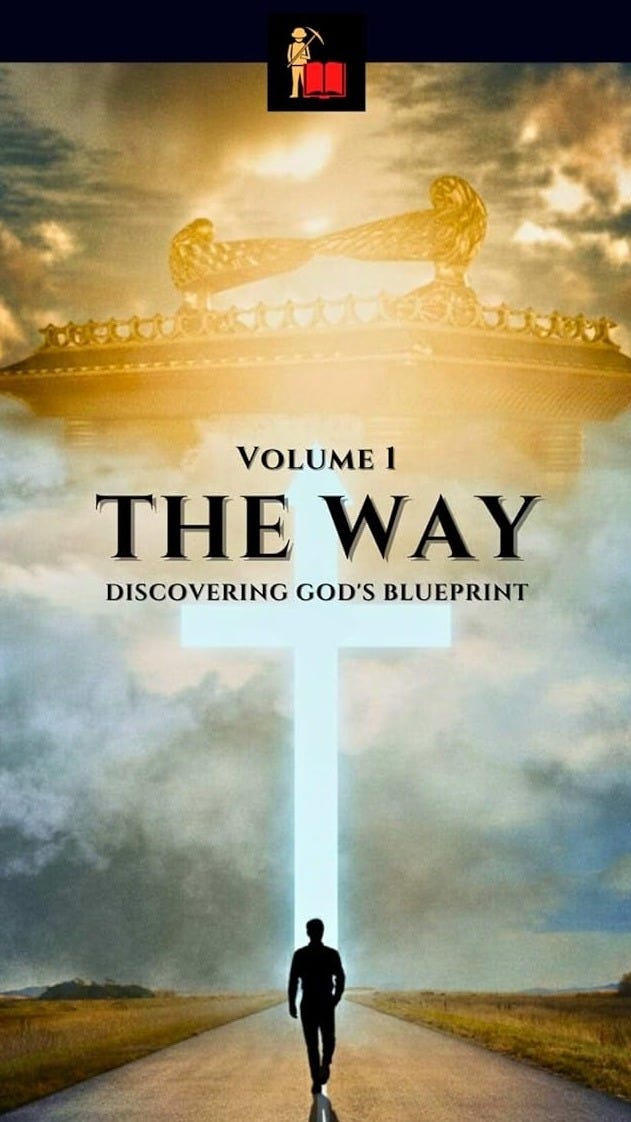
GET The Book: THE WAY: Discovering God’s Blueprint
What if the Bible’s key has been hidden in plain sight? Once you see it, Scripture will no longer seem scattered.
Sincere believers have pieced together disconnected verses, endured shallow teachings, and seen interpretations fail. The answer is the Biblical Sanctuary: God’s divine blueprint in Scripture from Genesis to Revelation. It’s not a human system but a pattern that unlocks prophecy, reveals Christ’s ministry, and turns fragmented knowledge into understanding.
LEARN The Core Pillars of Bible Study
Want to dig deeper into these truths? Explore The Core Pillars of Bible Study. Discover how Christ is the Center of all interpretation, why The Sanctuary is the Map for understanding God’s Word, and learn how Scripture is the Authority that interprets itself.
CONNECT WITH US:
Find Us on Social Media:
Legal “Stuff”
© 2026 The Word Miner Ministries