


What the Flag Cannot Say
The Word Miner Ministries | thewordminer.org
Memorial Day Devotional | Substack Edition
I’ve stood at gravesites where the silence after “Taps” goes on too long.
You know what I mean. The ceremony is exact. The flag is folded with mathematical precision. The words are chosen. And then the family drives home, the casseroles arrive, and people eventually stop calling. And you’re left sitting in a quiet room holding the question that nobody at the reception dared say out loud:
Did it mean anything? Will I see them again?
I’m not going to rush past that. It’s a real question. It costs something to ask it, and it deserves a real answer.
What I want to show you today is what Scripture actually says to people carrying that exact weight — not what religion says, not what tradition says, but what the Word of God says to mourners who are still standing at the edge of that grave in their minds.
A Soldier Who Knew What Grief Cost
Before we get to the main text, I want to show you something most people have never heard in a Memorial Day message.
David — the Psalm-writer, the king, the man after God’s own heart — was also a soldier. A commander. A man who sent men into battle and lost them. And when Jonathan, his closest comrade, died in combat, David didn’t reach for theology. He reached for a lament. And in that lament he said something raw and unfiltered:
“I am distressed for you, my brother Jonathan; you have been very pleasant to me; your love to me was wonderful, surpassing the love of women.” (2 Samuel 1:26, NKJV)
A soldier grieving a soldier.
No filter. No propriety. Just the full weight of the loss, laid out in the open.
I need you to see that. Scripture doesn’t flinch at grief. It doesn’t manage it or dress it up. God’s Word has more room for the rawness of loss than most church services do — and David’s lament proves it.
But David’s lament is not the end of the story.
And neither is yours.
Paul’s Answer to the Question Nobody Asks Out Loud
Here’s what the Apostle Paul wrote to believers who had lost people they loved — people who were asking the exact same question you may be asking today:
“But I do not want you to be ignorant, brethren, concerning those who have fallen asleep, lest you sorrow as others who have no hope.” (1 Thessalonians 4:13, NKJV)
Read that slowly. Because Paul is doing something very precise here.
He’s not telling you to stop grieving. That’s not what this verse is about. He’s drawing a line between two kinds of grief — grief without hope and grief with it. And notice: he doesn’t say the hope diminishes the sorrow. He says it changes what the sorrow is oriented toward. The difference isn’t in the depth of the love or the intensity of the loss. The difference is in what you know about where that love is going.
Then he answers the question the flag cannot answer:
“For the Lord Himself will descend from heaven with a shout, with the voice of an archangel, and with the trumpet of God. And the dead in Christ will rise first. Then we who are alive and remain shall be caught up together with them in the clouds to meet the Lord in the air. And thus we shall always be with the Lord.” (1 Thessalonians 4:16-17, NKJV)
There it is. Not a feeling. Not a coping mechanism. A promise. One anchored in the bodily resurrection of a Person who — three days after the worst day in human history — walked out of His own tomb.
He confirmed it Himself, face to face with a grieving woman, before His own resurrection had even happened:
“I am the resurrection and the life. He who believes in Me, though he may die, he shall live.” (John 11:25, NKJV)
I am — not “I will arrange” or “I have planned.” Present tense. Identity. The resurrection isn’t a program He administers. It’s who He is.
The One Who Is Still Standing Watch
Here’s something I want you to sit with — especially today.
Right now. Not yesterday at Calvary. Not at some distant future event. Right now, at this moment, Jesus Christ is at the right hand of the Father, serving as High Priest in the heavenly sanctuary, interceding for every person who has ever carried this kind of grief.
The outer court of the Hebrew sanctuary is where the blood was shed — substitutionary, final, complete. That happened at the cross. One sacrifice. Done.
But the High Priest didn’t stop at the outer court. He moved through the Holy Place and into the Most Holy Place — into the presence of God Himself — carrying that blood on our behalf. And He is still there. Paul makes this plain in a single verse that I don’t want you to miss:
“He always lives to make intercession for them.” (Hebrews 7:25, NKJV)
Always lives. Present tense. Active. Continuous.
The One who walked out of His own grave is actively — right now, on this Memorial Day — standing watch over every question the grave has not yet answered. Over every person you’ve lost. Over every folded flag sitting in a box in a back bedroom somewhere.
The flag says “served with honor.”
Christ says, “Because I live, you shall live also.” (John 14:19, NKJV)
Those are not the same promise. But only One of them has the authority to keep it — and only One of them is still alive to do so.
Your Field Assignment
Don’t take my word for any of this. Here is what I’d ask you to do before you put this down:
Assignment 1: Read 1 Thessalonians 4:13-18 in full. As you read each verse, write a one-sentence answer to this question: What is the difference between sorrow with hope and sorrow without it, and what makes that difference real?
Assignment 2: Read Hebrews 11:25, then Hebrews 8: 1-2, then John 11:25. As you move through those three texts, ask yourself one question: Is this the language of a finished work only — or is this the language of someone who is still actively present on my behalf?
The driving question: If Christ’s current ministry at the heavenly sanctuary is real and active right now — what does that mean for the people you’ve lost? What does that mean for you today?
That question won’t be answered in a devotional. It’ll be answered in your Bible. Open it.
The flag has done everything it can do. The One who folded the grave clothes — He’s still at work. And that changes everything about what grief is allowed to mean.
Scripture References Used in This Piece:
2 Samuel 1:26
1 Thessalonians 4:13, 16-17
John 11:25
John 14:19
Hebrews 7:25
Hebrews 8:1-2
All Scripture quotations taken from the New King James Version (NKJV) © 1982 Thomas Nelson, Inc.
All interpretations presented are subject to Scripture itself as the ultimate authority. Readers are encouraged to verify all teaching through personal Bible study following the Berean example (Acts 17:11).
Each reader bears personal responsibility for doctrine verification through independent Scripture study. No human authority, including the author, supersedes the Bible’s direct teaching.
The Word Miner Ministries | thewordminer.org
Ready for Biblical Study That Goes Deeper Than Sunday School?
Join Truth Prospectors receiving systematic biblical teaching using Scripture-interpreting-Scripture methodology. No denominational filters. No shallow devotionals. Just the authority of God’s Word unlocking Christ’s complete ministry through the Sanctuary framework.
The Word Miner Ministries Resources
LISTEN to The Word Miner Podcast
Tired of surface-level Bible teaching? Join us as we tactically mine Scripture’s hidden treasures through sanctuary-based interpretation. Discover how systematic Bible study reveals Christ’s complete ministry and empowers you to unearth profound truths that denominational traditions often miss.

READ Our Daily Devotional: The Daily Shekinah Revival
Daily devotions restoring God’s glory within. A biblical devotional series that guides Truth Prospectors through daily encounters with God’s presence, using sanctuary typology and Scripture-centered teaching to restore authentic spiritual revival in the believer’s heart and life.

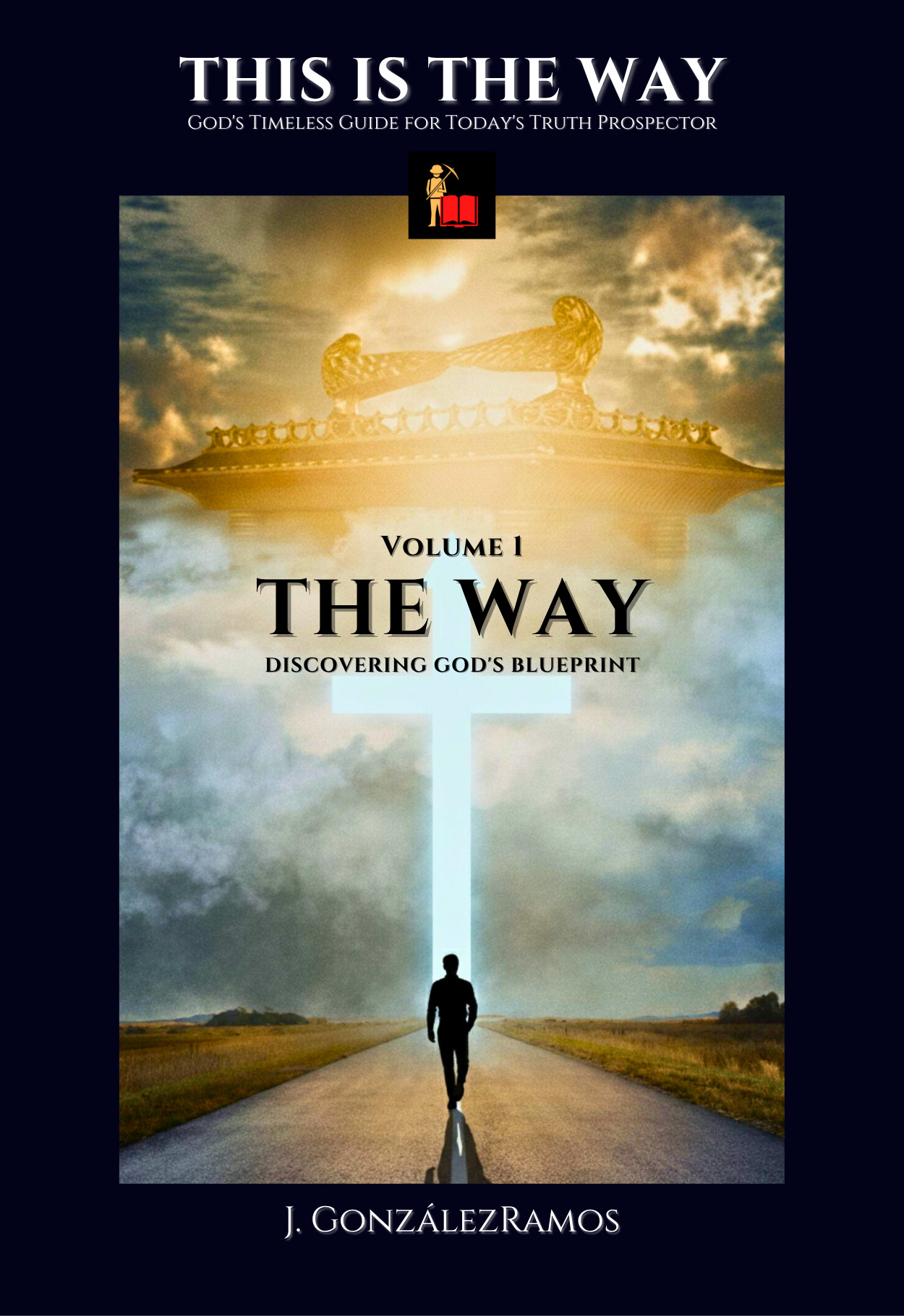
GET The Book: THE WAY: Discovering God’s Blueprint
What if the Bible’s key has been hidden in plain sight? Once you see it, Scripture will no longer seem scattered.
Sincere believers have pieced together disconnected verses, endured shallow teachings, and seen interpretations fail. The answer is the Biblical Sanctuary: God’s divine blueprint in Scripture from Genesis to Revelation. It’s not a human system but a pattern that unlocks prophecy, reveals Christ’s ministry, and turns fragmented knowledge into understanding.
LEARN The Core Pillars of Bible Study
Want to dig deeper into these truths? Explore The Core Pillars of Bible Study. Discover how Christ is the Center of all interpretation, why The Sanctuary is the Map for understanding God’s Word, and learn how Scripture is the Authority that interprets itself.
CONNECT WITH US:
Find Us on Social Media:
Legal “Stuff”
© 2026 The Word Miner Ministries