


There is a sentence that gets said so often in Christian communities that it has achieved the status of an axiom, something so obvious and so frequently repeated that questioning it feels almost like questioning the gospel itself.
“All you have to do is believe.”
And here is the thing: it is not wrong. It is incomplete. And the problem with an incomplete truth is that it can do more damage than a clear falsehood, because the partial truth provides enough cover that the missing piece goes unnoticed for a very long time.
What does it mean to believe? That is the question that almost never gets asked in the same breath as the assurance that belief is all that is required. And the failure to ask it leaves a gap that gets quietly filled by the easiest available answer, which is that believing means agreeing. Holding a position. Affirming that certain things are true about Christ. And by that definition, a very large number of people are in excellent shape. They have agreed. They have affirmed. The proposition is not in dispute.
But James names a problem with that definition that is difficult to argue with once you see it: “You believe that there is one God. You do well. Even the demons believe—and tremble!” (James 2:19, NKJV). The demons believe. They have the correct theological position. The position does not save them. Whatever faith is in the biblical sense, it is evidently not the same thing as having the correct answer to a doctrinal question, because the correct answer to that question is available to beings who are not being saved by it.
What the demons lack is not information. They have the information. What they lack is the posture of genuine submission and trust that produces a life actually oriented toward God. And that posture, when it is genuinely present, does not stay invisible. It shows up in the direction the life is moving. “For as the body without the spirit is dead, so faith without works is dead also” (James 2:26, NKJV). Not weakened. Not underdeveloped. Dead, in the sense that the essential quality that would make it a living thing is absent.
Jesus is equally specific about the gap between the statement and the substance. “Not everyone who says to Me, ‘Lord, Lord,’ shall enter the kingdom of heaven, but he who does the will of My Father in heaven” (Matthew 7:21, NKJV). The people saying Lord, Lord are not pretending. They are confident. They have the vocabulary and the affiliation and the sincere sense that their relationship with God is secure. And what Jesus points to as the determinative factor is not the sincerity of the profession. It is the correspondence between the life and the will of the Father.
This is not a works-based correction to the grace message. The altar was always pointing toward the One who would do what no human performance could accomplish. The standing before God is gift, not achievement, and that truth is irreplaceable and must not be lost. But the faith that receives that gift is not passive. It is not a position held at a comfortable distance from the God whose grace it is receiving. It is a living trust that produces a life actually pointed in the direction of the One being trusted, that generates in the person carrying it the same evidence of life that any living thing generates, which is movement, growth, fruit.
Think about what Paul actually describes when he talks about saving faith. In Romans 10:9 he says that if you confess with your mouth the Lord Jesus and believe in your heart that God raised Him from the dead, you will be saved. The believing he is describing is with the heart. Not with the intellect alone. The heart in the biblical sense is not the seat of emotion. It is the seat of the will, the deepest center of the person from which the direction of the life flows. A heart that has genuinely believed does not leave the life above it unchanged. It reorganizes it. The confession of the mouth and the direction of the life begin, over time, to tell the same story.
The deception the text is warning against is not the deception of cynical hypocrisy. It is the deception of sincerity without transformation. Of a faith genuinely held but held in a way that was never going to disturb the life already in progress. Of belief that costs nothing and therefore, perhaps, changes nothing. The person inside that deception is not performing. They are genuinely confused about what believing actually means, and the confusion has been maintained by the oft-repeated simplification that obscured what the biblical text actually says.
What would it mean to hold a belief that is actually alive? What would the evidence of that look like in the texture of an ordinary week?
That question is worth carrying rather than answering quickly.
Focus Verse: “Thus also faith by itself, if it does not have works, is dead.” — James 2:17 (NKJV)

Ready for Biblical Study That Goes Deeper Than Sunday School?
Join Truth Prospectors receiving systematic biblical teaching using Scripture-interpreting-Scripture methodology. No denominational filters. No shallow devotionals. Just the authority of God’s Word unlocking Christ’s complete ministry through the Sanctuary framework.
The Word Miner Ministries Resources
LISTEN to The Word Miner Podcast
Tired of surface-level Bible teaching? Join us as we tactically mine Scripture’s hidden treasures through sanctuary-based interpretation. Discover how systematic Bible study reveals Christ’s complete ministry and empowers you to unearth profound truths that denominational traditions often miss.

READ Our Daily Devotional: The Daily Shekinah Revival
Daily devotions restoring God’s glory within. A biblical devotional series that guides Truth Prospectors through daily encounters with God’s presence, using sanctuary typology and Scripture-centered teaching to restore authentic spiritual revival in the believer’s heart and life.

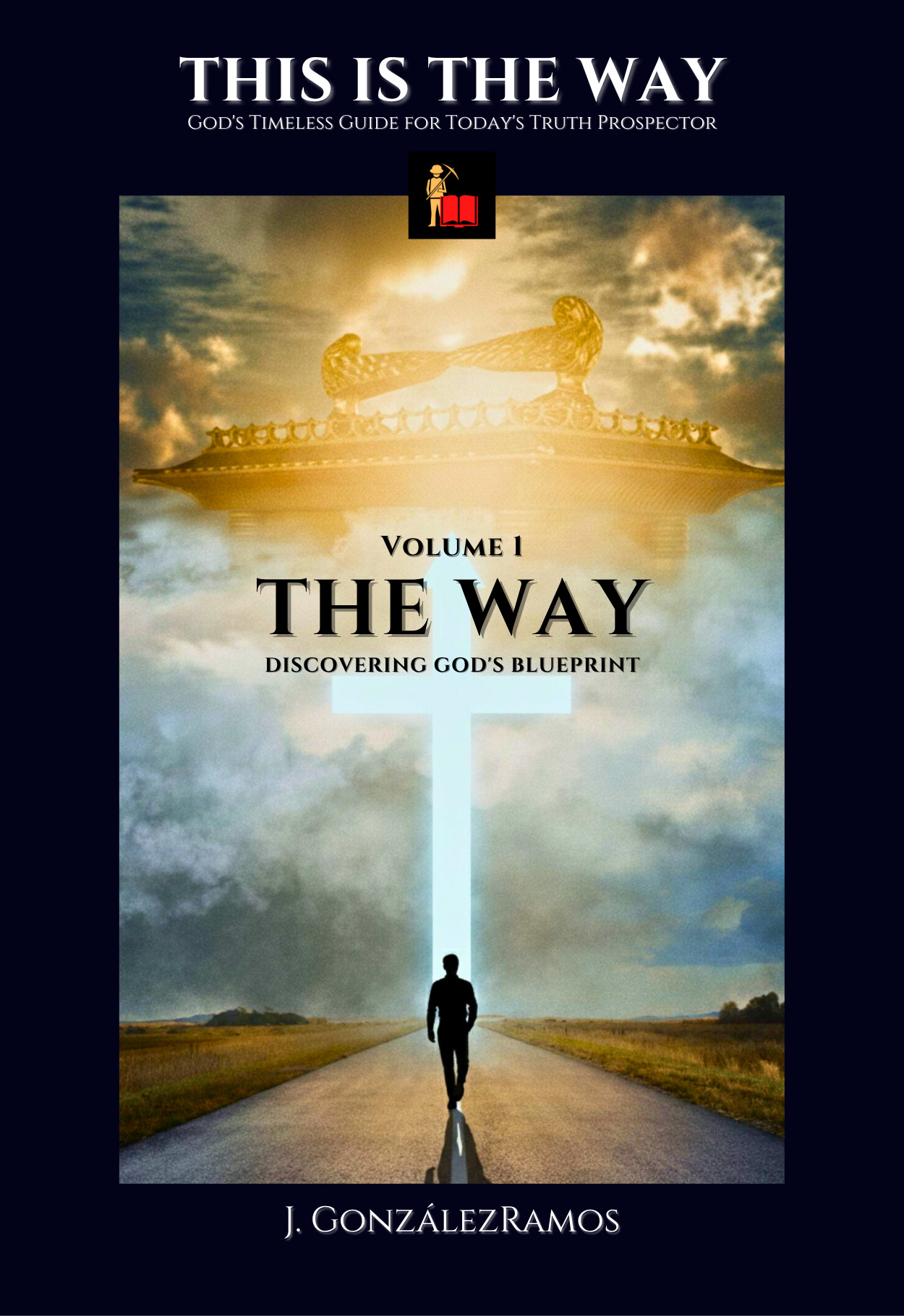
GET The Book: THE WAY: Discovering God’s Blueprint
What if the Bible’s key has been hidden in plain sight? Once you see it, Scripture will no longer seem scattered.
Sincere believers have pieced together disconnected verses, endured shallow teachings, and seen interpretations fail. The answer is the Biblical Sanctuary: God’s divine blueprint in Scripture from Genesis to Revelation. It’s not a human system but a pattern that unlocks prophecy, reveals Christ’s ministry, and turns fragmented knowledge into understanding.
LEARN The Core Pillars of Bible Study
Want to dig deeper into these truths? Explore The Core Pillars of Bible Study. Discover how Christ is the Center of all interpretation, why The Sanctuary is the Map for understanding God’s Word, and learn how Scripture is the Authority that interprets itself.
CONNECT WITH US:
Find Us on Social Media:
Legal “Stuff”
© 2026 The Word Miner Ministries