


The question has been present from the beginning of this week, hiding just beneath the surface of everything else. It is a simple question, and its simplicity is part of what makes it so difficult to dismiss. Why worry?
Not in the dismissive sense — not as a way of telling someone their trouble is not real or their fear is not legitimate. The troubles are real. The fears have substance. The question is not whether there is anything worth worrying about. The question is whether worry itself accomplishes what we believe it does.
Most people, if pressed, would not be able to articulate a clear answer. They worry because the situation seems to require it. They worry because not worrying feels irresponsible, as if concern were the same thing as care. They worry because everyone around them worries, and the absence of worry would mark them as either naive or indifferent. Worry has become such a default posture that ceasing it feels like a kind of moral abandonment.
But David had already asked the question from inside a genuinely dangerous situation. He was not a man insulated from threat. He wrote, “Cast your burden on the Lord, and He shall sustain you; He shall never permit the righteous to be moved.” The word “moved” carries the sense of being permanently dislodged — shaken loose from solid ground and sent sliding. David was not promising the absence of difficulty. He was describing an anchor that difficulty cannot pull loose.
This is the thread that has been running through everything this week, and it is worth naming plainly now. The anatomy of worry is the anatomy of a gaze turned inward and downward. The mind rehearses what it cannot control. It circles back to the same calculations that produced no solution the first time and tries them again, as if repetition might yield what reason could not. The burden grows heavier not because the situation worsens, but because the person carrying it adds fresh weight every hour through the simple act of picking it up again.
Casting — that same word Peter would use centuries later — breaks the cycle not by making the problem disappear but by changing who holds it. The person who casts and keeps their eyes on the One who received it discovers something that cannot be manufactured by any technique of the mind: a sustaining that arrives from outside the self, from a source that does not tire and cannot be overwhelmed by the scale of what has been committed to it.
Paul arrived at this the hard way. He did not inherit it as a doctrine. He learned it in circumstances that would have defeated a man relying only on his own interior resources. By the time he wrote the letter to the Philippians, he had developed something that he described with a striking word: contentment. Not the contentment of someone whose needs are all met, but contentment as a learned art — “I have learned, in whatever state I am, to be content.” The Greek word he used had been used by Stoic philosophers to describe a kind of self-sufficiency, a person needing nothing outside themselves to remain at peace. Paul took the word and turned it inside out. His contentment was not self-sourced. It was sourced in the One in whom he was rooted.
This is why the question “why worry?” is not, in the end, a question about circumstances. It is a question about location. Where is the self positioned? What is it resting on? A person positioned in their own competence will worry whenever the competence seems insufficient. A person positioned in their own planning will worry whenever the plan is threatened. But a person who has learned, through the repeated and unglamorous practice of casting, to rest their weight on something outside themselves — that person has access to a kind of stability that the circumstances cannot determine.
Peter closes the loop that opened at the beginning of this week. He writes, “Cast all your care upon Him, for He cares for you.” The reason for the casting is not strategy. It is not even peace as a desired outcome. It is this: He cares for you. The act of casting is rooted in a relationship, in the particular knowledge that the One receiving the burden does not receive it indifferently. He receives it because He is interested in the one who carried it.
That is the answer that holds up under examination. Not a technique. Not a discipline. Not even a posture, exactly, though it produces one. It is a recognition — that the weight was never meant to be carried alone, and the One who invited you to throw it has never once dropped what was given to Him.
“Cast your burden on the Lord, and He shall sustain you; He shall never permit the righteous to be moved.” — Psalm 55:22 (NKJV)
Ready for Biblical Study That Goes Deeper Than Sunday School?
Join Truth Prospectors receiving systematic biblical teaching using Scripture-interpreting-Scripture methodology. No denominational filters. No shallow devotionals. Just the authority of God’s Word unlocking Christ’s complete ministry through the Sanctuary framework.
The Word Miner Ministries Resources
LISTEN to The Word Miner Podcast
Tired of surface-level Bible teaching? Join us as we tactically mine Scripture’s hidden treasures through sanctuary-based interpretation. Discover how systematic Bible study reveals Christ’s complete ministry and empowers you to unearth profound truths that denominational traditions often miss.

READ Our Daily Devotional: The Daily Shekinah Revival
Daily devotions restoring God’s glory within. A biblical devotional series that guides Truth Prospectors through daily encounters with God’s presence, using sanctuary typology and Scripture-centered teaching to restore authentic spiritual revival in the believer’s heart and life.

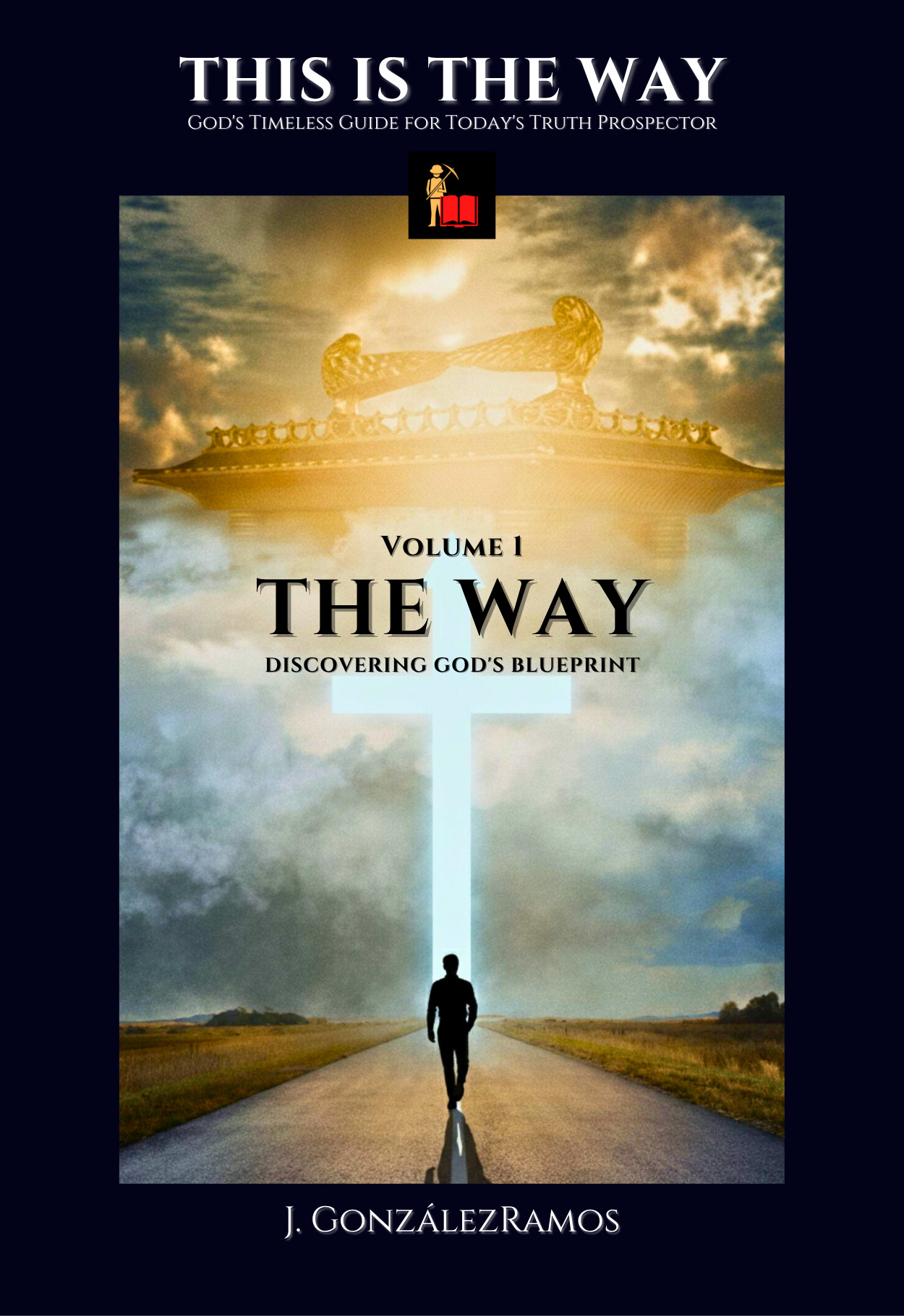
GET The Book: THE WAY: Discovering God’s Blueprint
What if the Bible’s key has been hidden in plain sight? Once you see it, Scripture will no longer seem scattered.
Sincere believers have pieced together disconnected verses, endured shallow teachings, and seen interpretations fail. The answer is the Biblical Sanctuary: God’s divine blueprint in Scripture from Genesis to Revelation. It’s not a human system but a pattern that unlocks prophecy, reveals Christ’s ministry, and turns fragmented knowledge into understanding.
LEARN The Core Pillars of Bible Study
Want to dig deeper into these truths? Explore The Core Pillars of Bible Study. Discover how Christ is the Center of all interpretation, why The Sanctuary is the Map for understanding God’s Word, and learn how Scripture is the Authority that interprets itself.
CONNECT WITH US:
Find Us on Social Media:
Legal “Stuff”
© 2026 The Word Miner Ministries